Smart Home Wiring: What to Decide Before First Fix
Most smart home regret is wiring regret. A few decisions at first fix determine what is possible for the next twenty years.
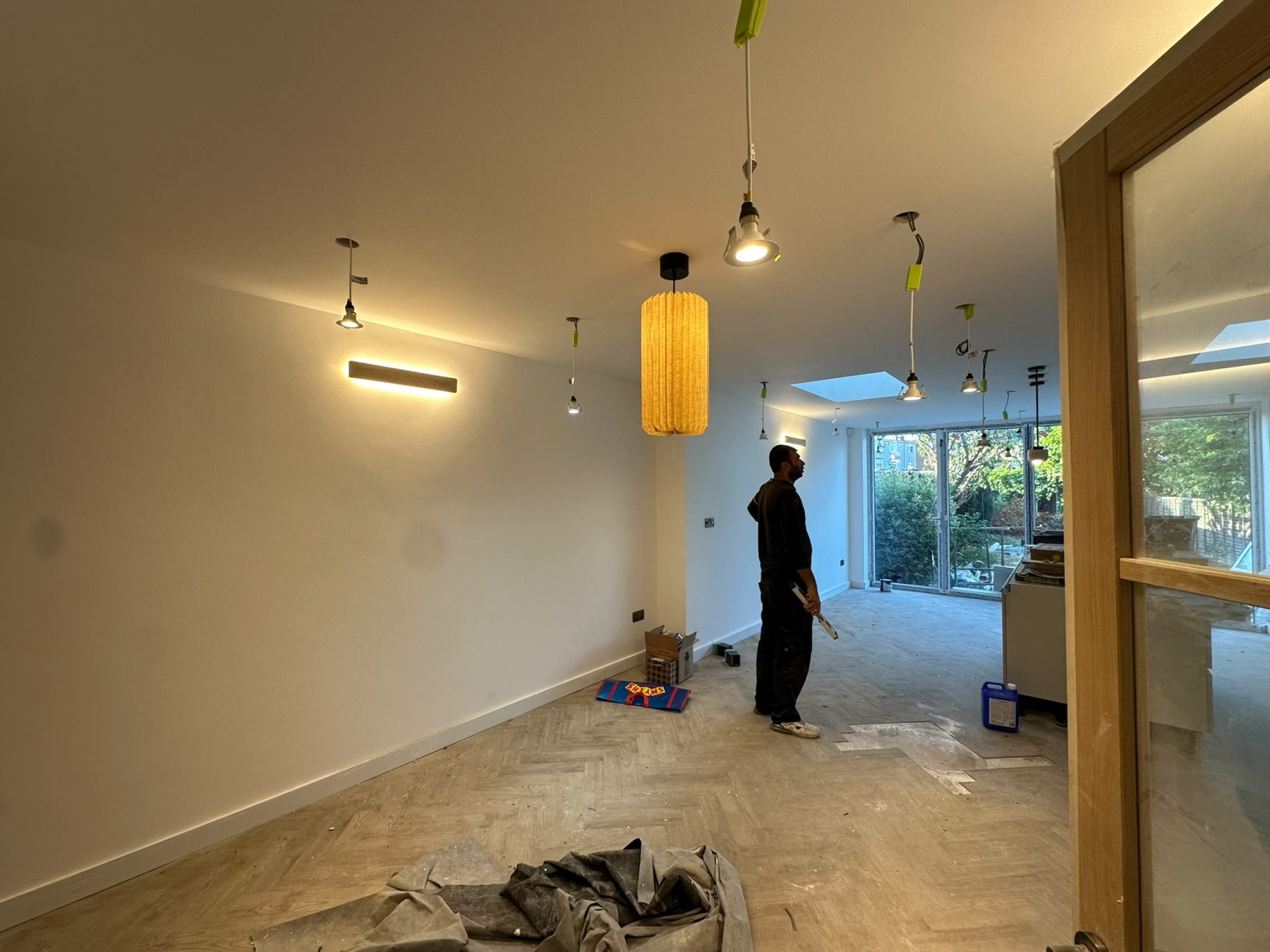
Smart home technology changes quickly. Wiring does not. The decisions that matter are therefore the ones that determine what is physically possible later, rather than which brand of anything to buy now.
Here is what to settle before the plasterboard goes on.
Control at the fitting or at the switch?
This is the fundamental fork.
Smart bulbs and fittings put the intelligence in the light itself. Easy to retrofit, no wiring changes — but the physical switch has to stay on for them to work, which is a permanent source of household friction.
Smart switches put the intelligence at the wall. The switch works normally for anyone who ignores the app, which is the significant practical advantage. But many require a neutral conductor at the switch position, and older installations frequently do not have one.
Centralised control runs wiring from each fitting back to a central location. The most flexible and by far the most expensive, and only sensible during major work.
The decision that matters at first fix is simply this: run a neutral to every switch position. It costs almost nothing during first fix and preserves the switch-based option permanently.
Run cable even if you will use wireless
Wireless is convenient and cable is reliable. Since pulling cable is cheap when walls are open and expensive when they are not, the sensible approach is to run it anyway.
Particularly worth running:
- Data to every room where anyone might work or put a television.
- Data to ceiling positions for wireless access points, which perform far better than a single router.
- Cable to likely camera positions, even if you install wireless cameras initially.
- Cable to the front door for a video doorbell, and to any gate.
Somewhere for the equipment to live
Routers, switches, hubs, recorders and controllers accumulate. They need somewhere with power, ventilation and cable access — a cupboard, a utility room, a dedicated position.
Without one, everything ends up in a pile in the hall with a nest of cables, which is both unsightly and unreliable.
Heating controls
Smart heating controls frequently need wiring at the boiler or the zone valves, and a power supply at the thermostat position. Worth establishing while the system is accessible rather than afterwards.
Think about who else lives there
A system that only the person who configured it can operate is a system that will be resented. Every smart control should have an obvious manual equivalent — a switch that works when the internet is down and a guest can find the light.
This is the most common reason smart installations get partially removed after a year.
Do not over-commit
Standards and platforms change. Wiring, containment and spare capacity age well. Specific hardware does not.
Spend on the infrastructure, keep the hardware replaceable, and you will be in a good position whatever the next decade brings.
Plan it with us
If you are building or refurbishing, raise smart control at design stage. Most of it costs very little at first fix and a great deal afterwards.
Keep reading
Related guides
Domestic Electrical Safety: What to Check at Home
A short, practical list of things worth noticing in your own home — none of which require tools or any risk to you.
Common Electrical Problems in London Homes
London’s housing stock produces a recognisable set of electrical problems. Here are the ones we see most often, and why.
Electrical Considerations Before a Loft Conversion
Loft conversions run into the same electrical surprise again and again — and it is one that is much cheaper to find at design stage.