Electrical Considerations When Buying a Property
A survey will mention the electrics in a paragraph of caveats. Here is how to find out what it actually means.
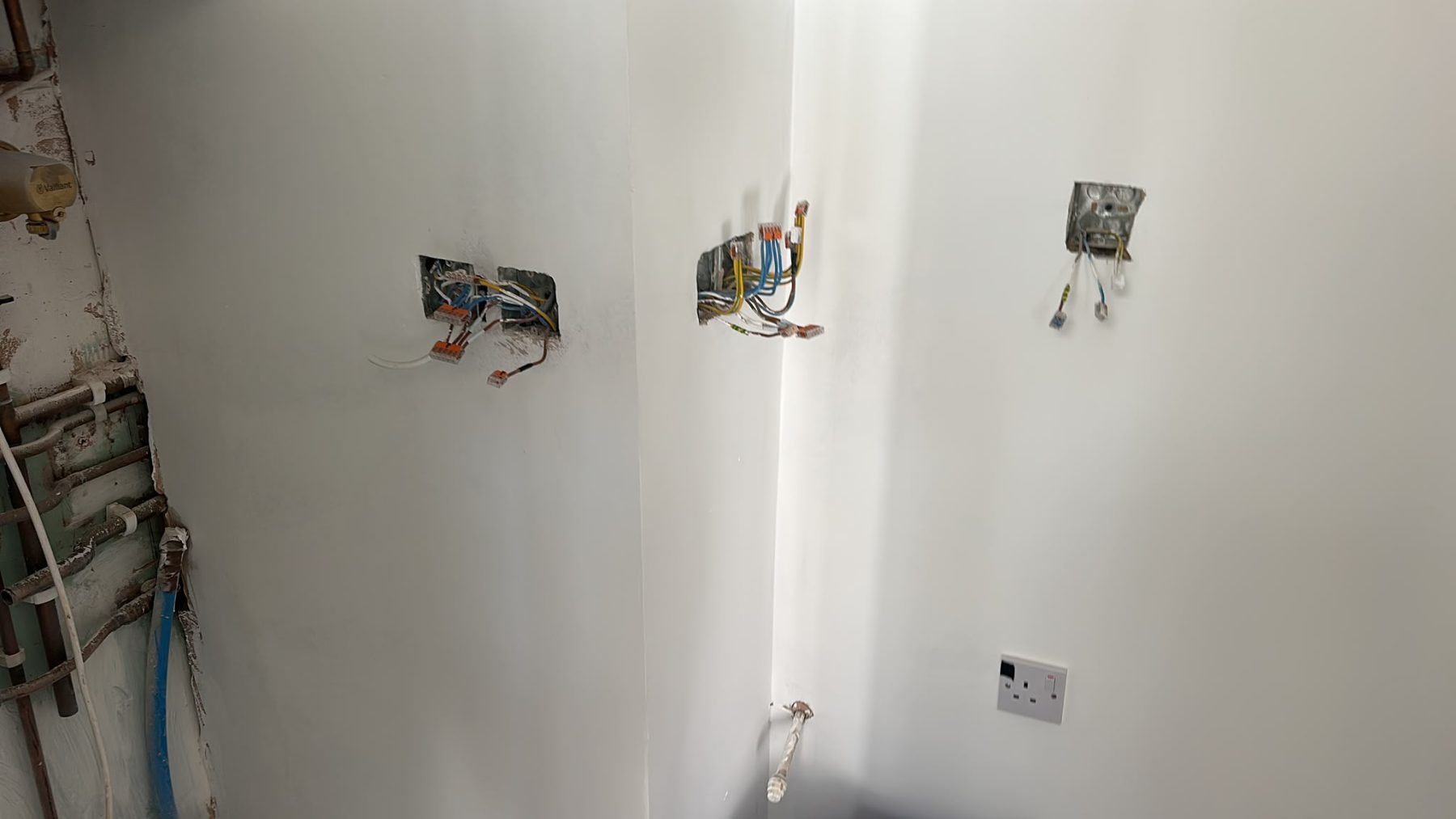
Property surveys handle electrical installations cautiously. The surveyor is not an electrician, cannot test anything, and will recommend further investigation as a matter of course.
That leaves buyers with a vague concern and no information. Here is how to convert it into something useful.
Look at the consumer unit yourself
You can do this on a viewing, and it tells you a lot in thirty seconds:
- Fuse wire in carriers means a very old installation.
- Switches with no test button means no RCD protection.
- A test button means RCD protection of some kind.
- Discolouration, scorch marks or a wooden enclosure are all worth noting.
- Whether the circuits are labelled, and whether the labels look like they have been updated.
Take a photograph. It is genuinely useful, and any electrician can tell you a great deal from it.
Look at the accessories
Round-pin sockets mean very old wiring. A mixture of socket styles across the house suggests work done piecemeal at different times. Sockets with no earth pin in a bathroom, or accessories that look inappropriate for where they are, are worth noting.
Count them too, while you are there. A house with two sockets per room will need work regardless of its condition.
Ask for the paperwork
The seller should have certification for any notifiable work: consumer unit replacement, new circuits, bathroom work. Ask for it.
Absence is not proof of a problem, but it means notifiable work may have been carried out without certification — which is a matter for your solicitor and may affect price or require indemnity insurance.
Commission an EICR
This is the only way to actually know. An Electrical Installation Condition Report tests the installation and produces a schedule of observations with codes.
It costs a fraction of a survey and tells you considerably more about the electrics than the survey will. It also gives you something concrete: C1 and C2 items are work that must be done, which is a number you can take into a negotiation.
Reading the result
An unsatisfactory report is not a reason to walk away. It is a scope of work. The useful question is what the remedial work costs, and whether that is reflected in the price.
C3 items are recommendations rather than requirements, and should not be treated as equivalent to C2s in a negotiation.
Budget for the likely work
In practice, the common items in an older property are a consumer unit replacement, additional sockets, and remedial work on specific circuits. Occasionally a partial rewire. A full rewire is less common than people assume, and should be evidenced by test results rather than by the age of the house.
Do it while it is empty
If work is needed, the window between exchange and moving in — or immediately after — is by far the cheapest time. Empty properties are quicker, cheaper and less disruptive to work on.
Send us the report
If you have an EICR and are not sure what it means for you, send it over. We will tell you what the observations actually call for.
Keep reading
Related guides
Why Does My Circuit Breaker Keep Tripping?
A breaker that trips is doing its job. Understanding which of three faults it is reporting tells you how seriously to take it.
What an EICR Is, and What the Codes Actually Mean
Electrical Installation Condition Reports are full of codes that decide whether you have a problem. Here is how to read one.

Common Electrical Problems in London Homes
London’s housing stock produces a recognisable set of electrical problems. Here are the ones we see most often, and why.