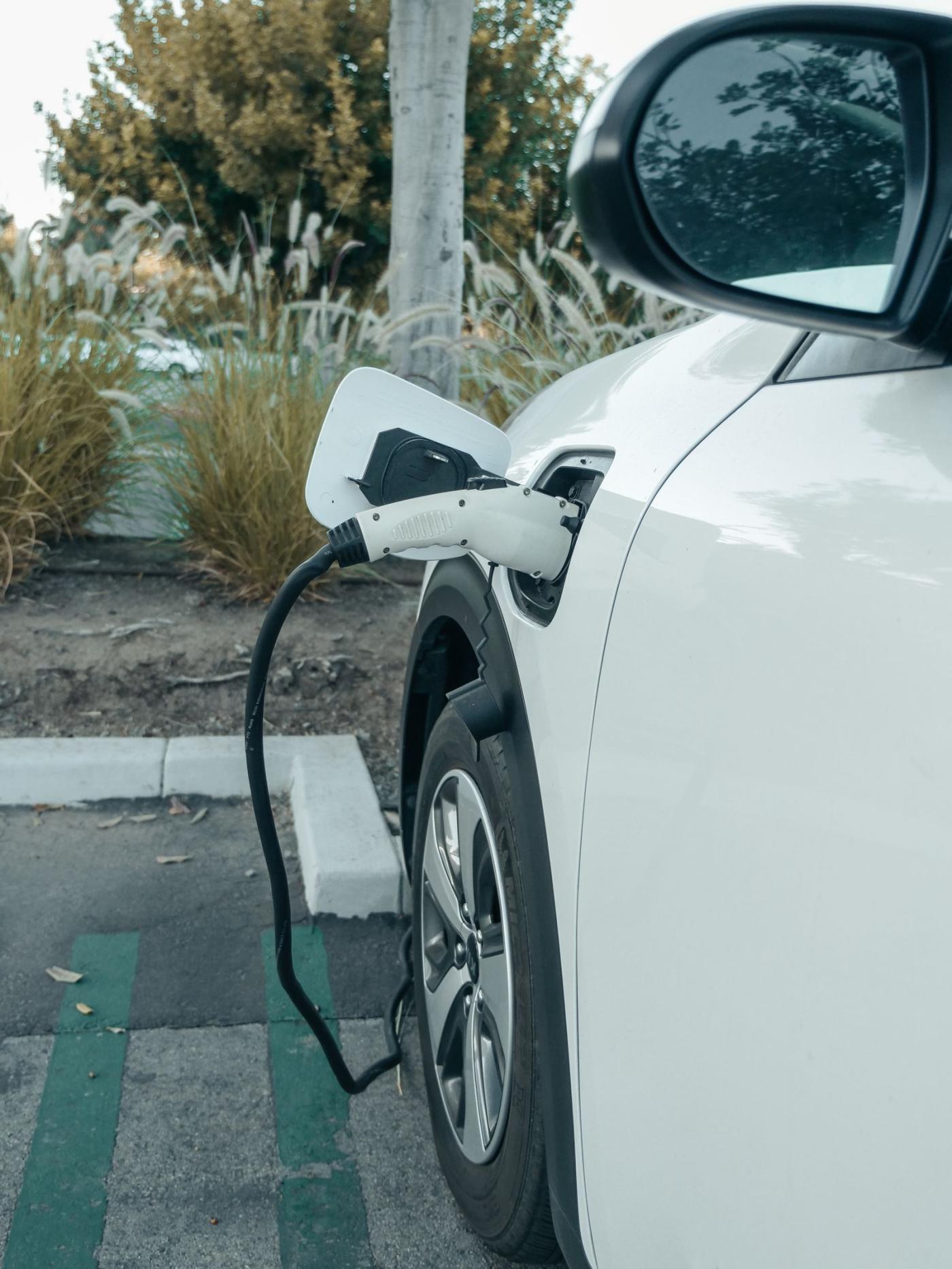
What to Know Before Installing an EV Charger at Home
Home charging is straightforward in a property that can support it. Five things determine whether yours can.
BeydilliBright Ltd. — London and the surrounding areas
Service
Electric vehicle charging point installation and upgrades for homes and commercial premises across London, including the supply assessment that determines what is possible.
Installing an EV charger is a straightforward job in a property that can support it, and a more involved one in a property that cannot. The difference is established before anything is ordered.
An EV charger is a continuous load, drawing at or near its rated current for hours at a time. That is a different demand from almost anything else in a home, and it is why the assessment matters.
The relevant questions are the capacity of the incoming supply, the main fuse rating, the condition and capacity of the consumer unit, the earthing arrangement, and the route from the board to where the charge point will go. In London, the earthing arrangement in particular often determines what protective device is required.
For a house with off-street parking and a reasonably modern consumer unit, installation is usually a single visit: mounting the unit, running a dedicated circuit with appropriate protection, and commissioning and configuring it.
Where the consumer unit is older or already full, some work at the board is normally needed first — see our consumer unit page.
Flats and properties without off-street parking are a harder problem, and not one that always has a good answer. We will tell you honestly if the installation you are asking about is not practical.
Commercial installations bring questions a domestic one does not: how many charge points, whether they will be used simultaneously, whether load management is needed to avoid exceeding the supply, access control, and whether usage needs to be billed or allocated.
Workplaces, retail premises and managed properties increasingly install charging as an amenity, and planning for more units later is usually worth doing at the first installation.
Earlier charge points can often be replaced with a faster or smarter unit using the existing circuit, provided the supply and protective devices are adequate. Smart functionality — scheduling, tariff integration, usage monitoring — is where most of the practical benefit of newer units lies.
Government support for EV charge point installation changes periodically, and eligibility depends on the property type and circumstances. [INSERT INFORMATION] — current scheme details and any installer registration required should be confirmed before relying on them.
Tell us the property type, where the vehicle parks and roughly where the consumer unit is. We will explain what the installation would involve.
If you have off-street parking, usually yes. The factors that decide it are the incoming supply, the main fuse rating, the condition and capacity of the consumer unit, the earthing arrangement, and the route from the board to where the charge point will go.
Related: EV Charger Installation
For a straightforward domestic installation, typically a single visit — mounting the unit, running a dedicated circuit with appropriate protection, and commissioning it. Where consumer unit work is needed first, that adds time, which is why the assessment happens before anything is ordered.
Related: EV Charger Installation
Often. A charge point needs a dedicated circuit with appropriate protection, and a board with no spare ways or no RCD protection cannot provide it. In older housing this is the most common reason an otherwise simple installation becomes a two-part job.
Related: EV Charger Installation
It is considerably harder. Without an allocated parking space and a viable route from a supply you control, a home charge point often is not practical. Where a block is considering shared charging, that is a project for the building rather than an individual installation.
Related: EV Charger Installation
Because it determines what protection the installation requires. Some supply earthing arrangements need specific measures for a circuit supplying a vehicle outdoors. It is checked as part of the assessment rather than assumed, and it varies between properties on the same street.
Related: EV Charger Installation
One that can schedule charging, respond to tariffs and report usage. The practical benefit is charging when electricity is cheapest, which for most households is where the running-cost saving actually comes from. Some functionality is now expected as standard on new units.
Related: EV Charger Installation
Yes. Where multiple units may be used at the same time, load management is usually needed so that the total demand stays within what the supply can deliver. For commercial installations it is worth planning for future units at the first installation rather than rebuilding later.
Related: EV Charger Installation
Often the existing circuit can be reused, provided the supply and protective devices are adequate for the new unit. That is checked rather than assumed — a faster unit on a circuit sized for the old one is not an upgrade, it is a problem.
Related: EV Charger Installation
Home charging is straightforward in a property that can support it. Five things determine whether yours can.
A dedicated charge point is not just faster than a three-pin plug. The difference is mostly about cost and safety, not speed.
Workplace charging is rarely about one charge point. Designing for the second and third is what keeps it affordable.
Call us
Describe the fault or the job and we will tell you what is involved.
Keep exploring