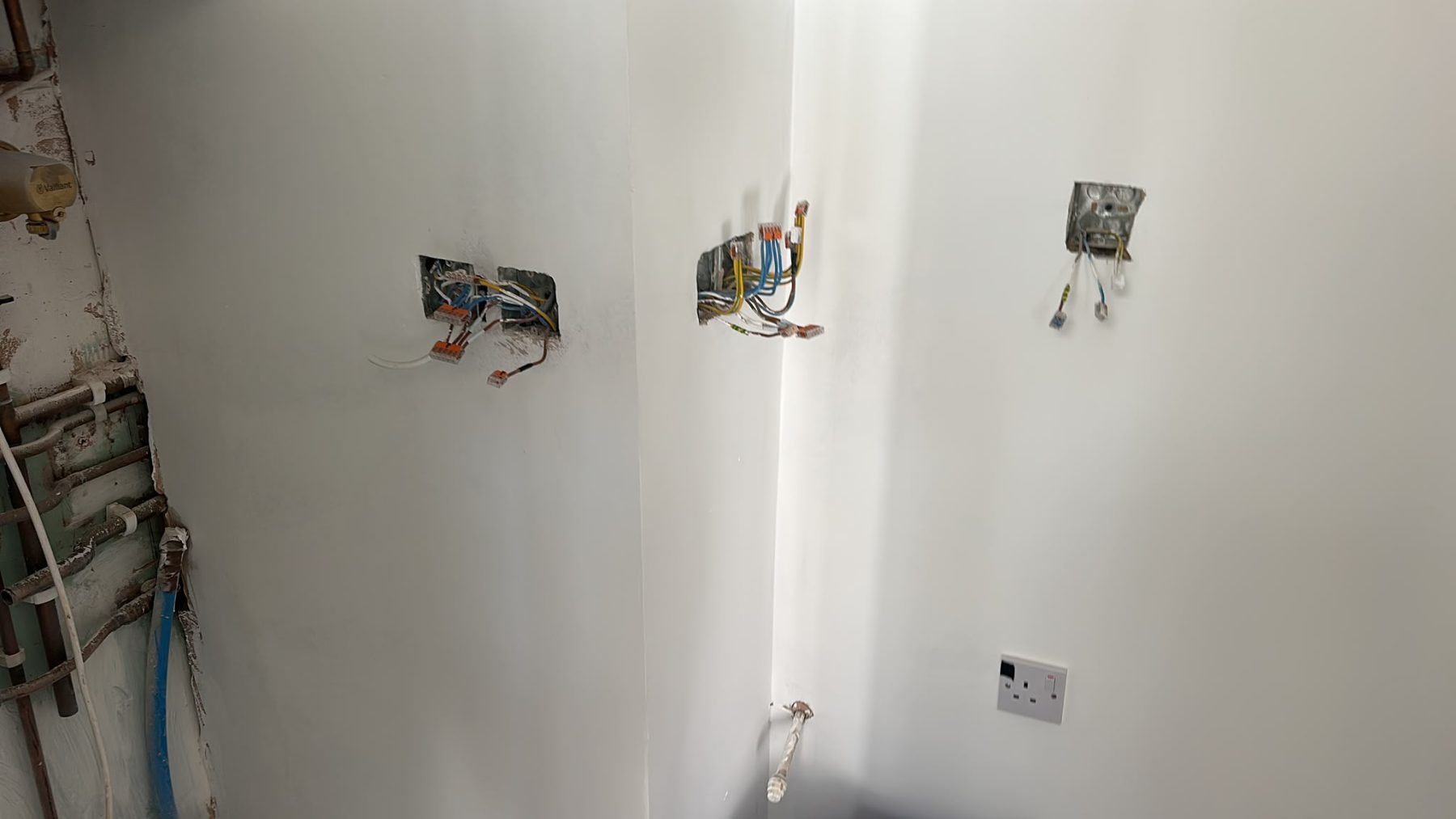
Electrical work covers a wide range of jobs that have very little in common beyond the trade that carries them out. A tripping circuit in a flat, a shop that needs additional power for new equipment, and a house being rewired during a renovation are all electrical work — but each needs a different approach.
BeydilliBright Ltd. carries out general electrical work across London for domestic, commercial and landlord clients, from single repairs through to full installations.
Electrical installation
New installation work ranges from adding circuits to an existing board to wiring a property from scratch. The starting point is always the existing installation: what is already there, what condition it is in, and whether the supply and distribution can take what you are planning to add.
That assessment matters more than it sounds. A property can happily run its existing load for years and still be unable to support an additional high-demand circuit without work at the consumer unit or, in some cases, at the supply itself.
Electrical maintenance
Maintenance is the work that stops faults becoming failures. In a commercial setting that usually means planned visits to inspect and test the installation, check terminations and connections, and deal with anything showing early signs of trouble. In a domestic setting it is often triggered by a change — a new tenancy, a sale, or simply an installation that has not been looked at in a long time.
Electrical repairs
Repairs are what most people ring about. A socket has stopped working, a circuit keeps tripping, lights flicker, or something has failed outright. Some of these are genuinely small jobs. Others are the visible symptom of something that needs attention across a wider part of the installation.
The honest answer is that until the fault has been traced, it is not always possible to say which. What we can do is explain what we find and what the options are before carrying out further work.
Electrical fault finding
Fault finding is a discipline in its own right. Intermittent faults in particular — a circuit that trips occasionally, or only in wet weather, or only when a particular appliance is used — need methodical testing rather than guesswork.
The process is one of narrowing down: isolating circuits, testing insulation resistance and continuity, and working through the installation until the cause is identified rather than masked.
Electrical remedial work
Remedial work is what follows an inspection report. If you have had an Electrical Installation Condition Report (EICR) carried out and it has come back with coded observations, those items need addressing — and the codes indicate how urgently.
We carry out remedial work arising from inspection reports for homeowners, landlords and commercial property managers, working through the observations so the installation can be brought to a satisfactory condition.
General electrical works
Not everything fits a category. Moving a socket during a kitchen refit, adding an outdoor supply for a garden office, upgrading old lighting, or wiring in new equipment are all routine work that sits under general electrical services.
Getting started
Describe what is happening or what you are planning, and we will tell you what is involved. Where the work needs assessing on site before it can be priced, we will say so rather than quoting blind.