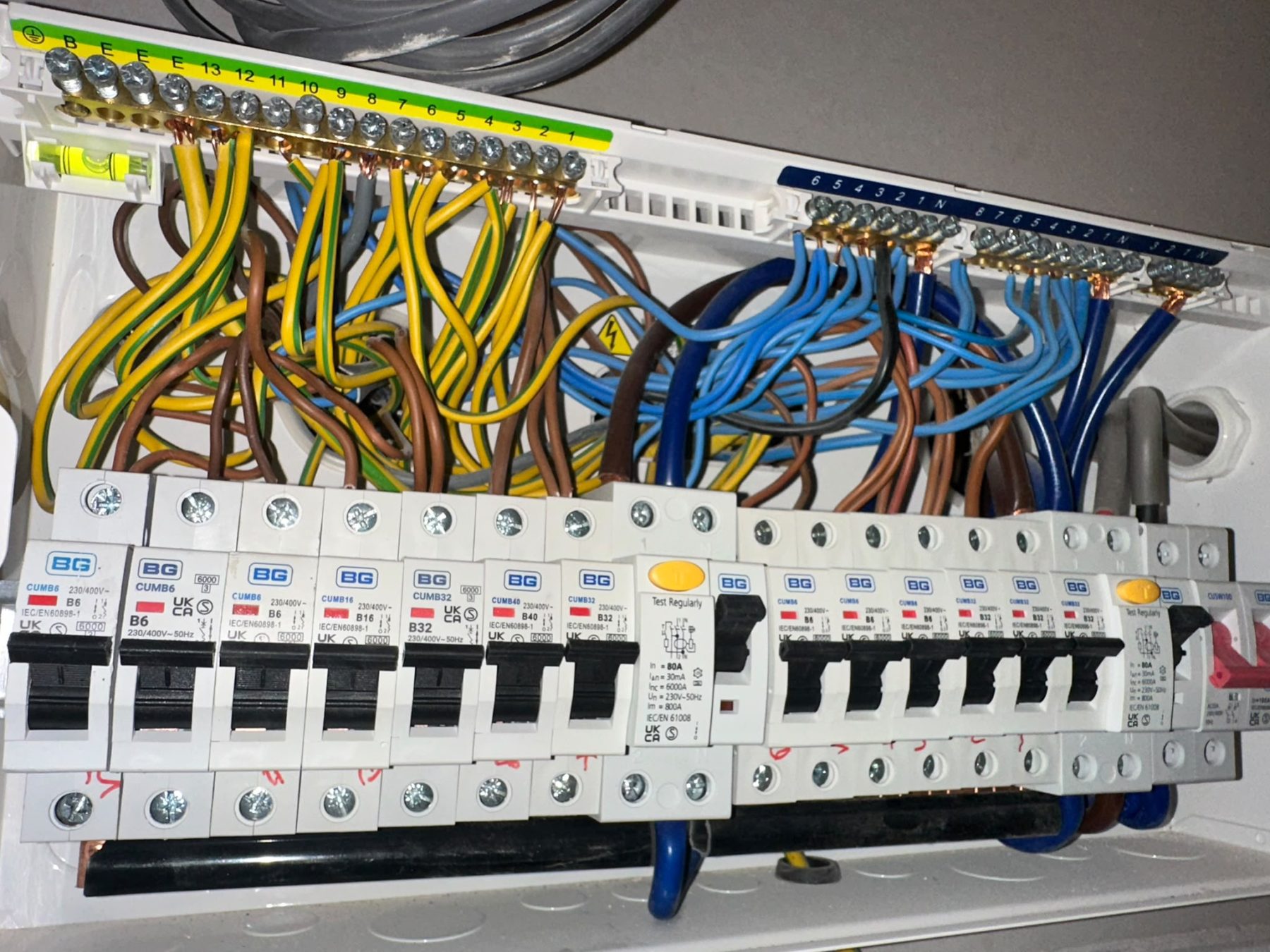
Signs Your Consumer Unit May Need Replacing
Not every old board needs replacing — but some genuinely do. Here is how to tell the difference without guessing.
BeydilliBright Ltd. — London and the surrounding areas
North London
Barnet is one of London’s largest boroughs and one of its most varied — from Edwardian Finchley terraces to the large detached housing around Totteridge and Mill Hill.
Postcode districts: EN4, EN5, N2, N3, N11, N12, N20, NW4, NW7, NW11
Barnet covers a great deal of ground, and the electrical work reflects that. North Finchley and Whetstone have busy retail parades where the commercial work is mostly shopfits, lighting and maintenance around trading hours. Hampstead Garden Suburb and Totteridge have large period houses where the work is often a full rewire or a substantial lighting scheme.
Between them sit the long residential streets of Finchley, Hendon and Edgware — mostly inter-war and post-war stock, and the source of a steady flow of consumer unit upgrades and domestic electrical work.
Loft and side-return extensions are common across Barnet, and they are a frequent trigger for electrical work: an extension usually needs new circuits, and the existing board often has no spare ways to accommodate them. It is worth establishing that at the design stage rather than at second fix.
Large detached properties in the borough also raise the question of supply capacity more often than smaller housing does — particularly where an EV charger, electric heating and a substantial lighting load all need to coexist.
Call 07832450917, email info@beydillibright.com, or send an enquiry through the contact page. Tell us what the property is, what needs doing and roughly when you are hoping to have the work carried out. Some jobs can be priced from that description; others need looking at first, and we will say which yours is.
That depends on the job, and we will tell you before arranging anything. A quick look at a consumer unit is different from a detailed survey of a commercial installation. What we will not do is turn up and present a charge you were not expecting.
The property type and rough age, what is happening or what you are planning, and where the consumer unit is. A photograph of the board is genuinely useful and often tells us more than a description. For commercial premises, the trading hours and any access restrictions matter from the first conversation.
For some jobs, yes — a straightforward, well-described piece of work in a property with no complications can be priced from a conversation. For anything where the existing installation affects the answer, a phone quote would be a guess, and a guess that changes later is worse than no quote at all.
It varies with the size of the job and what is already scheduled. Tell us your timescale when you enquire and we will be straight with you about whether it is achievable. We do not publish response times we cannot consistently meet.
Yes. A lot of our domestic work is remedial work following Electrical Installation Condition Reports, consumer unit replacement between tenancies, and repairs in let property. Working through a report's observations systematically is usually quicker and cheaper than addressing them one at a time.
Yes. On refurbishment and extension projects it helps considerably to be involved before first fix, because the electrical requirement often affects decisions that are expensive to revisit — particularly whether the existing consumer unit can take the new circuits.
Yes. Electrical work in an occupied property generates dust and debris, and clearing it is part of the job rather than an extra. Where work involves chasing walls or lifting floors, we will explain beforehand what the disruption will actually look like.
Not every old board needs replacing — but some genuinely do. Here is how to tell the difference without guessing.
They are the same thing — but the difference between an old board and a modern one is substantial, and worth understanding.
A breaker that trips is doing its job. Understanding which of three faults it is reporting tells you how seriously to take it.
Our own photography
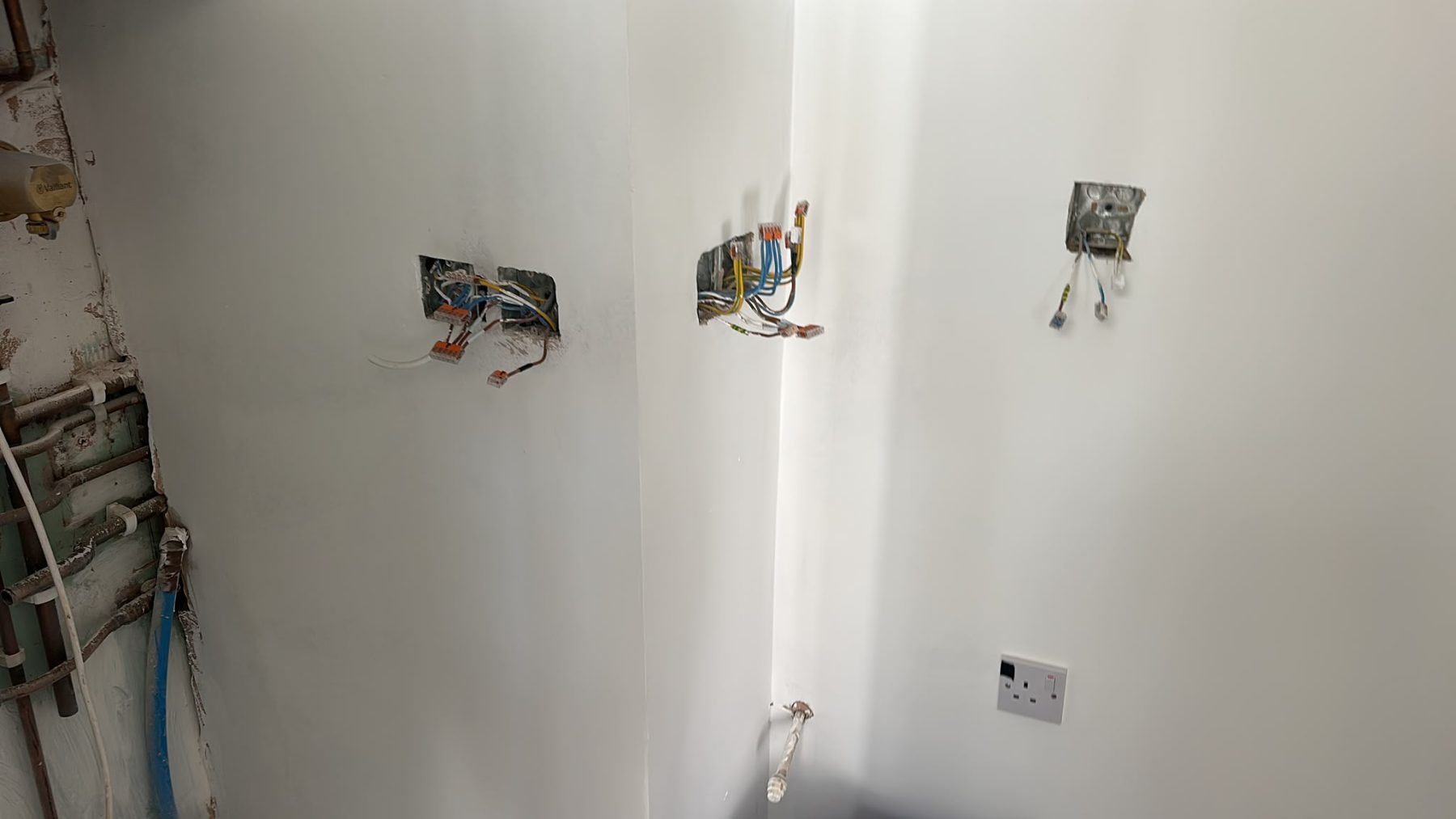
Photographs of installations we have completed.
Call us
Describe the fault or the job and we will tell you what is involved.
Keep exploring