Powering a Garden Office or Outbuilding
A garden room needs a designed supply, not an extension lead. Here is what that actually involves.
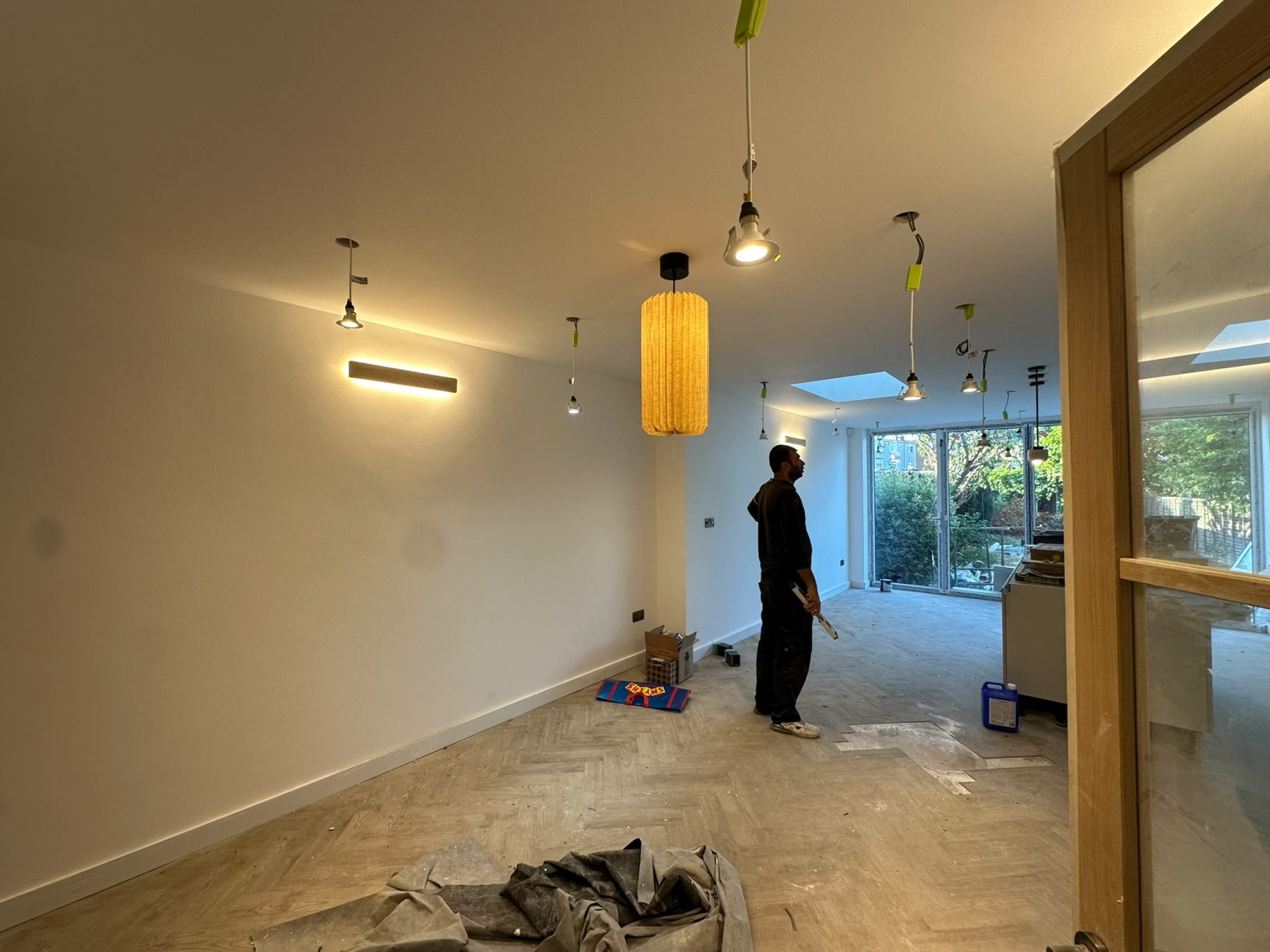
Garden offices, studios and workshops have become genuinely common, and almost all of them need power. The temptation is an extension lead from the house. The reality is that an extension lead across a lawn is unsafe in dry weather and actively dangerous in wet.
A proper supply is not a complicated job. It is just a designed one.
What the outbuilding actually needs
Start with the load. A home office with a laptop, a monitor and a light is a modest demand. A workshop with power tools, or a studio with a heater and a kiln, is not.
Heating matters most. A garden room used year-round needs heating, and electric heating is a substantial continuous load that changes the sizing of everything upstream of it.
The supply itself
The supply is a dedicated circuit from the consumer unit, run to a small distribution board in the outbuilding, which then supplies the sockets and lighting there.
That sub-board arrangement matters: it means the outbuilding's circuits can be isolated and protected locally, rather than everything depending on one device back in the house.
Getting the cable there
Two options.
Buried underground is the usual choice. It needs the correct cable type — armoured cable, in practice — at an adequate depth, with marker tape above it so that someone digging later gets a warning. Depth matters: shallow cable meets spades.
Overhead is possible but needs adequate height and proper support, and is more vulnerable to damage. It is rarely the better answer.
Whichever route, the cable has to be sized for the load and the length. Long runs cause voltage drop, and a cable that is adequate over ten metres may not be over forty.
Protection
RCD protection is required for a circuit supplying an outbuilding, without exception. The earthing arrangement also needs consideration, because the earthing arrangement at the house does not automatically extend to a separate structure without thought.
This is one of the places where an improvised installation goes wrong invisibly — everything works, and the protection that should be there is not.
Inside the building
Worth thinking about properly, because it is cheap at first fix:
- More sockets than you expect, positioned for a desk rather than a wall.
- Data — wireless coverage at the bottom of a garden is often poor, and a cable run alongside the power is far easier now than later.
- Lighting appropriate to the use, with task lighting where work happens.
- Provision for heating, sized properly.
- External lighting on the route to the building.
Board capacity
As with most additions, the consumer unit is frequently the constraint. A dedicated circuit needs a spare way, and older boards rarely have one.
Certification
A new circuit is notifiable work and requires certification. Worth having properly documented — it is the sort of thing that gets asked about when a property is sold.
Talk to us about the building
Tell us the distance from the house, what the building will be used for and how it will be heated. Those three answers determine most of the design.
Keep reading
Related guides
Domestic Electrical Safety: What to Check at Home
A short, practical list of things worth noticing in your own home — none of which require tools or any risk to you.
Common Electrical Problems in London Homes
London’s housing stock produces a recognisable set of electrical problems. Here are the ones we see most often, and why.
Electrical Considerations Before a Loft Conversion
Loft conversions run into the same electrical surprise again and again — and it is one that is much cheaper to find at design stage.