How Many Sockets Does a Room Need?
There is no regulation number. But there is a reliable test, and most homes fail it.
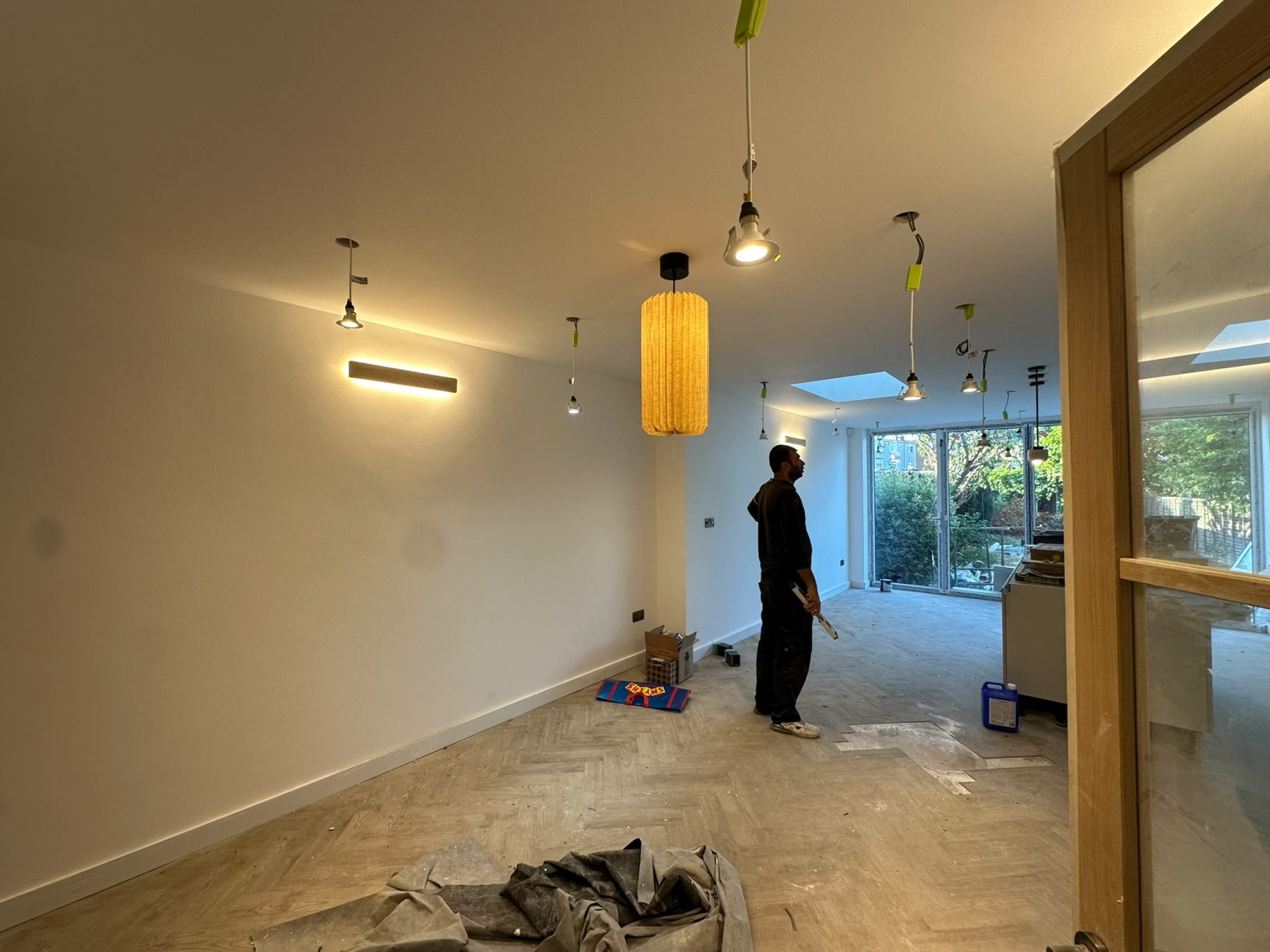
There is no rule specifying how many sockets a room must have. There is, however, a very reliable test: if you are using an extension lead permanently, the room does not have enough.
By that standard, most homes are short.
Why homes run out
Housing built before about 1990 was wired for a household with a fraction of today's plugged-in devices. A living room needed a lamp and a television. It now runs a television, a soundbar, a games console, a router, several chargers and a lamp or two.
The sockets did not multiply. Extension leads did.
Room by room
Living room. Typically the worst affected. A media wall alone accounts for four or five outlets, and then there are lamps, chargers and whatever is seasonal. Double sockets at each likely furniture position, plus a pair at the media wall, is a sensible starting point.
Kitchen. The highest demand and the highest concentration. Worktop sockets in the places appliances actually live, plus isolation for integrated appliances. More detail in our article on kitchen electrics.
Bedrooms. Both sides of the bed, without exception — this is the single most appreciated addition in any bedroom. Plus provision for a desk or dressing table if there is one.
Home office. Considerably more than people plan for. A computer, monitors, a printer, charging, lighting and a fan or heater adds up fast.
Hallway. One is genuinely useful, for vacuuming if nothing else.
Loft and garage. Frequently have none at all, and both benefit.
Position matters more than count
Sockets behind a sofa are the least useful position in a room, and they are astonishingly common. Think about where furniture actually sits, where people actually sit, and where things actually get plugged in.
Height is worth considering too. Sockets at skirting level mean bending down; slightly higher is easier, and in a home where accessibility matters it is worth planning deliberately.
USB outlets
Convenient, and worth fitting where charging happens — bedsides, kitchen worktops, desks. Two caveats: they are slower than a good separate charger, and the electronics inside them date faster than the socket does.
Fitting them everywhere is unnecessary. Fitting them where phones are actually charged overnight is genuinely useful.
Adding sockets without redecorating
Sometimes possible. Where a new socket can be fed from an adjacent one, or from below through a floor void, damage can be minimal. Where a cable has to be chased into a wall, some making good is unavoidable.
We will tell you which applies before starting, rather than after.
Circuit capacity
Adding sockets does not add capacity to the circuit they sit on. In rooms with genuinely heavy demand — kitchens, home offices with lots of equipment — the answer may be an additional circuit rather than additional outlets on the existing one.
That depends on the board having a spare way, which brings us back to the consumer unit again.
Worth doing
Adding sockets is one of the cheapest improvements to how a house works day to day. Tell us which rooms and roughly where, and we will tell you what is involved.
Keep reading
Related guides
Domestic Electrical Safety: What to Check at Home
A short, practical list of things worth noticing in your own home — none of which require tools or any risk to you.
Common Electrical Problems in London Homes
London’s housing stock produces a recognisable set of electrical problems. Here are the ones we see most often, and why.
Electrical Considerations Before a Loft Conversion
Loft conversions run into the same electrical surprise again and again — and it is one that is much cheaper to find at design stage.