Electrical Work in Flats: Permissions and Practicalities
Electrical work in a flat is rarely difficult. The complications are routes, permissions and neighbours.
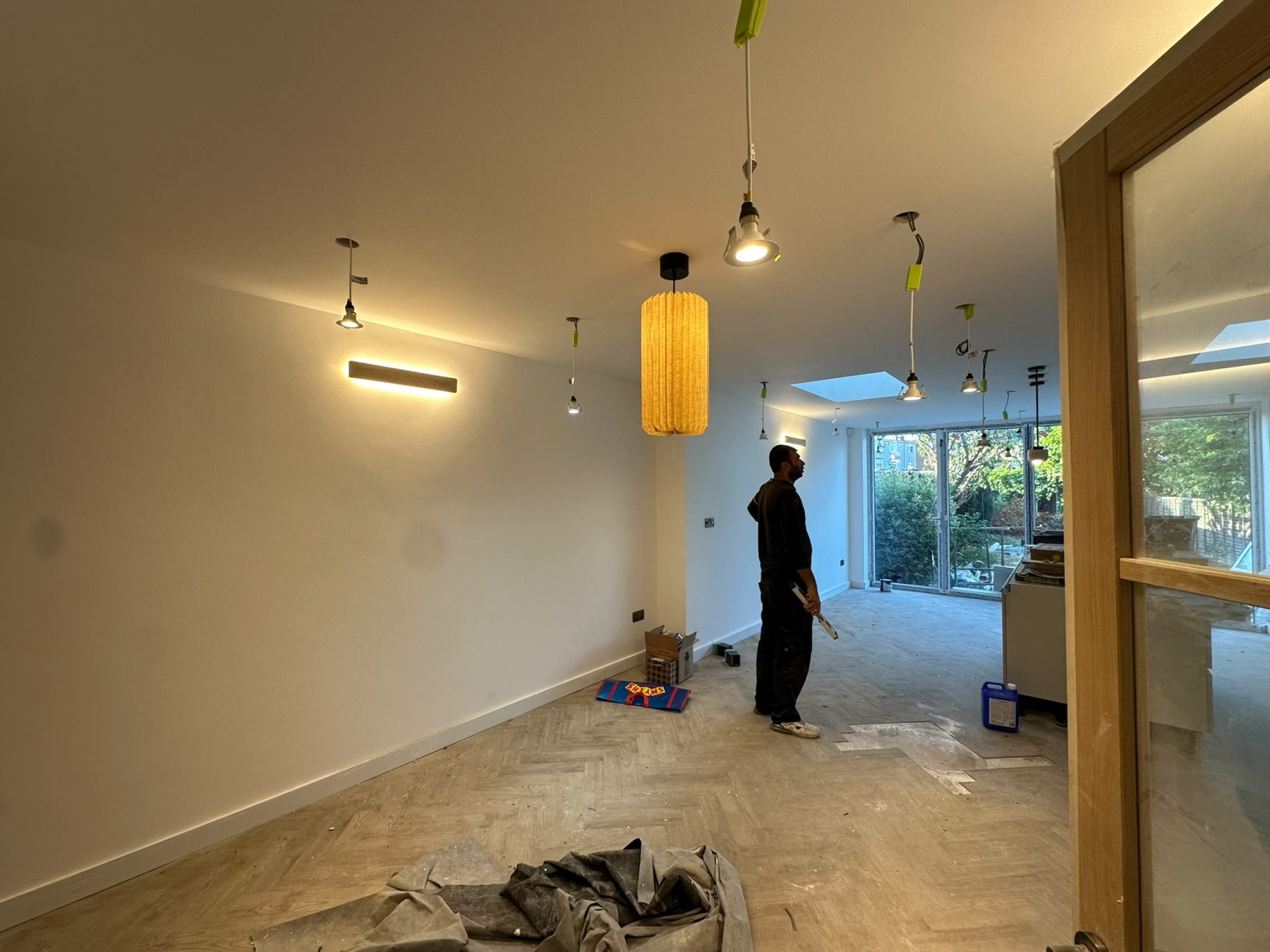
A great deal of London's housing is flats, and electrical work in them follows different rules from work in a house — not electrically, but practically.
Where your installation begins
The first question in any flat is where the boundary sits between the communal installation and yours.
Typically there is an intake position for the building, then sub-mains to each flat, then your consumer unit. Everything from your board onwards is yours. What comes before it usually is not.
In purpose-built blocks this is generally documented. In converted houses it frequently is not, and establishing it is the necessary first step before any board work. It is not unusual for that investigation to take longer than the job it precedes.
Permissions
Leaseholders generally need the freeholder's or managing agent's consent for works, and the threshold varies. Replacing a light fitting will not need it. Replacing a consumer unit, running new circuits or anything touching communal areas usually will.
Check your lease. Managing agents commonly have a formal process: notice periods, contractor details, insurance requirements, and defined working hours. Starting that process early is worthwhile, because it takes as long as it takes.
Cable routes
This is the real technical constraint in flats.
Party walls cannot be chased through. Floors are frequently shared with the flat below, so lifting them may not be possible. Ceilings belong to the structure. Concrete construction in post-war blocks limits chasing considerably.
The result is that routing often determines the design. Surface containment, trunking behind furniture, or accepting that a socket goes where a cable can reach rather than where you would ideally put it — these are normal compromises in flats, and better discussed before the work than discovered during it.
Neighbours
Drilling and chasing in a flat is audible throughout the building. Telling neighbours in advance costs nothing and prevents a great deal of friction, particularly where people work from home.
Many blocks restrict noisy work to defined hours, and those restrictions are worth checking rather than discovering.
Access to risers and cupboards
Where work involves the communal riser or an intake cupboard, access is controlled by the managing agent and often needs to be arranged for a specific slot. Turning up expecting access rarely works.
What is usually straightforward
Within the flat, and within the existing circuits: replacing accessories, lighting, adding a socket where an adjacent one can feed it, consumer unit replacement where the board position is unchanged.
What needs more planning
New circuits requiring long runs, moving the consumer unit, anything in a bathroom, and anything at all that touches communal parts of the building.
Tell us about the building
When you enquire, tell us it is a flat, whether it is purpose-built or converted, which floor, and whether there is a managing agent. All four affect how the work is planned. See our domestic electrical services page.
Keep reading
Related guides
Domestic Electrical Safety: What to Check at Home
A short, practical list of things worth noticing in your own home — none of which require tools or any risk to you.
Common Electrical Problems in London Homes
London’s housing stock produces a recognisable set of electrical problems. Here are the ones we see most often, and why.
Electrical Considerations Before a Loft Conversion
Loft conversions run into the same electrical surprise again and again — and it is one that is much cheaper to find at design stage.