Why Testing Before a Consumer Unit Change Matters
The most common way a board replacement goes wrong is skipping the part that happens before the board is touched.
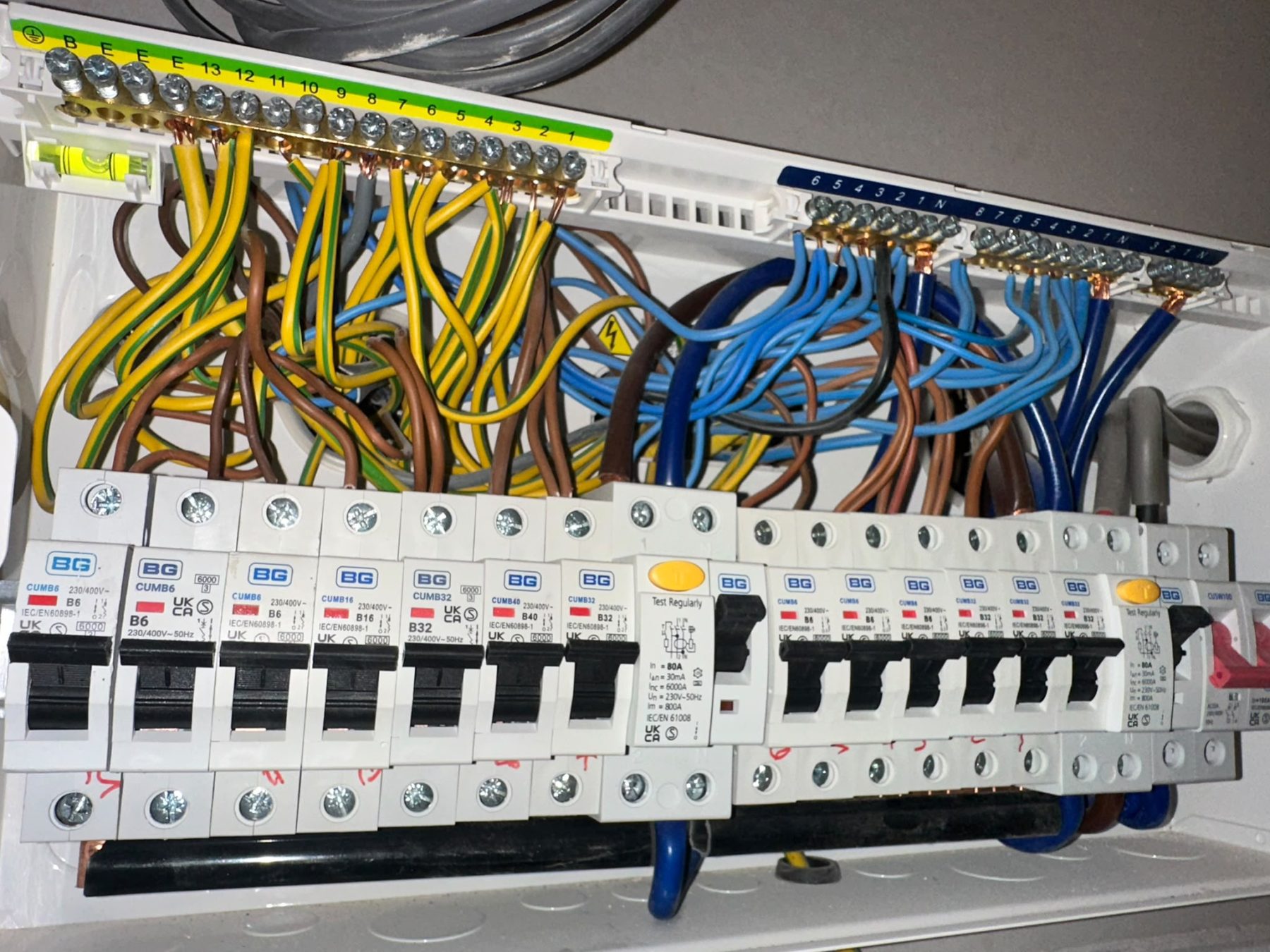
There is a particular kind of bad day that follows a cheap consumer unit replacement. The new board goes in, looks smart, and will not stay switched on. The RCD trips. It trips again. Nobody can say why, and the person who fitted it is no longer answering the phone.
This is almost always the same failure, and it is entirely preventable.
What an old board is hiding
An old consumer unit without RCD protection does not monitor earth leakage. It cannot tell you that the insulation on a thirty-year-old lighting circuit has deteriorated, or that a buried cable has been damaged, or that moisture has found its way into an outdoor circuit.
The installation has been running with those faults for years. Nothing has drawn attention to them, because nothing was looking.
Fit a modern board with sensitive RCD protection, and it looks. Immediately. What was invisible becomes a circuit that will not stay energised.
What the pre-replacement testing does
Before a board is replaced, each existing circuit should be tested — insulation resistance in particular, along with continuity and polarity. That establishes the condition of the wiring the new board will be protecting.
It answers the question that matters: will these circuits work with RCD protection, and if not, what needs attention first?
This is not gold-plating. It is the difference between a job that finishes and a job that turns into an argument.
What the testing sometimes finds
Most often, nothing that changes the plan — a couple of circuits that need attention and then proceed normally.
Sometimes it finds a specific fault: a damaged cable, a wet junction, a failing accessory. That is a defined piece of additional work, and you can decide about it with your eyes open.
Occasionally it finds widespread deterioration across the installation, which means a new board alone will not resolve things. That is unwelcome news, but it is far better received before the work than during it.
Why some quotes are cheaper
A quote that covers only the board and the labour to swap it will be cheaper than one that includes testing before and certification after. It is cheaper because it is a different piece of work.
If you are comparing quotes for a consumer unit replacement, the question worth asking is what testing is included. The answer usually explains the difference.
Afterwards
Once the new board is in, every circuit is tested again and the installation is certified. The board should be labelled clearly, so that in five years' time somebody can tell which switch does what without a process of elimination involving the whole household.
That last part sounds trivial. It is remarkable how often it is skipped, and how much time it wastes afterwards.
Talk to us first
If you are getting quotes for a board replacement, we are happy to explain what our quote includes and why. See our consumer unit page, or call 07832450917.
Keep reading
Related guides
Signs Your Consumer Unit May Need Replacing
Not every old board needs replacing — but some genuinely do. Here is how to tell the difference without guessing.
Consumer Unit vs Fuse Box: What Is the Difference?
They are the same thing — but the difference between an old board and a modern one is substantial, and worth understanding.
Why Does My Circuit Breaker Keep Tripping?
A breaker that trips is doing its job. Understanding which of three faults it is reporting tells you how seriously to take it.