Signs Your Consumer Unit May Need Replacing
Not every old board needs replacing — but some genuinely do. Here is how to tell the difference without guessing.
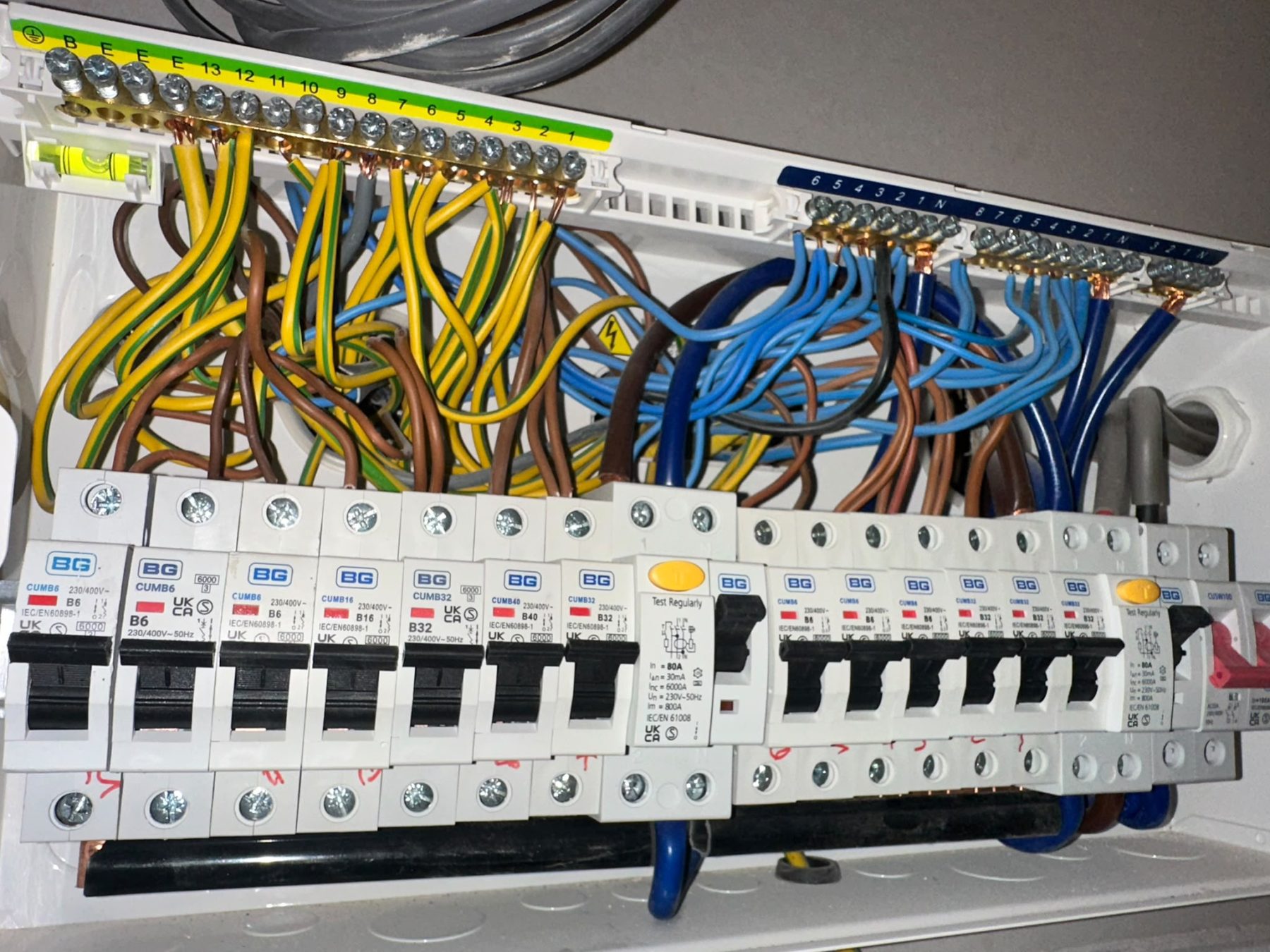
The consumer unit is the least interesting object in most homes and the most important one electrically. It is where the incoming supply is divided into circuits, and where each of those circuits is protected against the things that go wrong.
It is also the component where an upgrade makes the biggest single difference to the safety of an installation — which is why "should I replace my fuse box?" is one of the questions we are asked most often.
The honest answer is that age alone does not decide it. Plenty of boards installed decades ago are in sound condition and doing their job. What matters is what protection they provide and what state they are in.
The signs that genuinely matter
Rewirable fuses instead of circuit breakers
If your board has porcelain or plastic carriers with fuse wire in them rather than switches that click, you are looking at an installation that predates modern practice by a long way. Rewirable fuses do protect the cable against overload, but they do it slowly, and the fuse wire can be — and often has been — replaced with the wrong rating by a previous occupant.
No RCD protection at all
This is the big one. An RCD disconnects the supply when current leaks to earth. That is the fault that matters when a person is involved: someone drilling into a cable, a damaged lead on a garden tool, a failed appliance in a bathroom.
An older board without RCD protection will happily continue supplying a circuit in which current is flowing to earth through a person. That is the gap a modern board closes, and it is the single strongest argument for replacement.
A wooden back box
Boards mounted on or in wooden enclosures date from a period when that was normal practice. It is no longer considered acceptable in domestic premises, where the enclosure is now expected to be non-combustible — a change that followed a pattern of fires starting in the board itself.
Any sign of heat
Discolouration, scorch marks, a smell of hot plastic, or any buzzing from the board are all reasons to have it looked at promptly. A consumer unit should be silent and unremarkable. Heat means a connection that is not doing its job properly, and connections that generate heat are how electrical fires start.
Repeated tripping with no explanation
A breaker that trips once and resets cleanly may simply have caught a failing appliance. One that trips repeatedly is reporting something, and resetting it each time is not a fix. It may be the circuit, it may be the device itself, and testing is what tells them apart.
No spare ways
This is the most common reason we replace boards, and it has nothing to do with safety. If you are adding an EV charge point, a garden office supply, or the circuits an extension needs, and the board is full, something has to change.
What a replacement actually involves
The part people do not expect is the testing beforehand. A new board with sensitive RCD protection will immediately reveal faults that an old board tolerated silently for years — most often deteriorated insulation in older wiring.
Finding those faults before the board is changed is what prevents the miserable scenario where a brand new consumer unit will not stay switched on and nobody can say why. It is also why a competent quote for this work includes the testing rather than treating it as an optional extra.
The work itself is usually a day for a straightforward domestic board: isolating the supply, transferring circuits, testing each one, and labelling the finished installation properly.
When replacement is not the answer
Sometimes the sensible fix is smaller — adding a way for one new circuit, or improving the protection on a specific circuit. And occasionally the testing reveals the opposite problem: wiring behind the board that has deteriorated to the point where a new board alone will not resolve anything.
Either way, that is something to establish before the work rather than halfway through it.
If you are not sure
A photograph of your board is usually enough for us to tell you whether it is worth a conversation. Send one, or call us on 07832450917. Our consumer unit page sets out the work in more detail.
Keep reading
Related guides
Consumer Unit vs Fuse Box: What Is the Difference?
They are the same thing — but the difference between an old board and a modern one is substantial, and worth understanding.
Why Testing Before a Consumer Unit Change Matters
The most common way a board replacement goes wrong is skipping the part that happens before the board is touched.
Why Does My Circuit Breaker Keep Tripping?
A breaker that trips is doing its job. Understanding which of three faults it is reporting tells you how seriously to take it.