When Should You Call an Electrician?
Some electrical problems can wait. Some genuinely cannot. Here is a practical way to tell which is which.
People are reasonably good at knowing when a tap needs a plumber. Electrical problems are harder to judge, partly because the warning signs are less obvious and partly because nothing appears to be leaking.
Here is a practical way to sort them.
Stop using it and call now
These are not wait-and-see situations:
- Any smell of burning near a socket, switch, light fitting or the consumer unit.
- Scorch marks, melted plastic or discolouration on any electrical accessory.
- Any electric shock, however mild, from an appliance, a fitting or a switch.
- Buzzing, crackling or humming from the consumer unit or from any accessory.
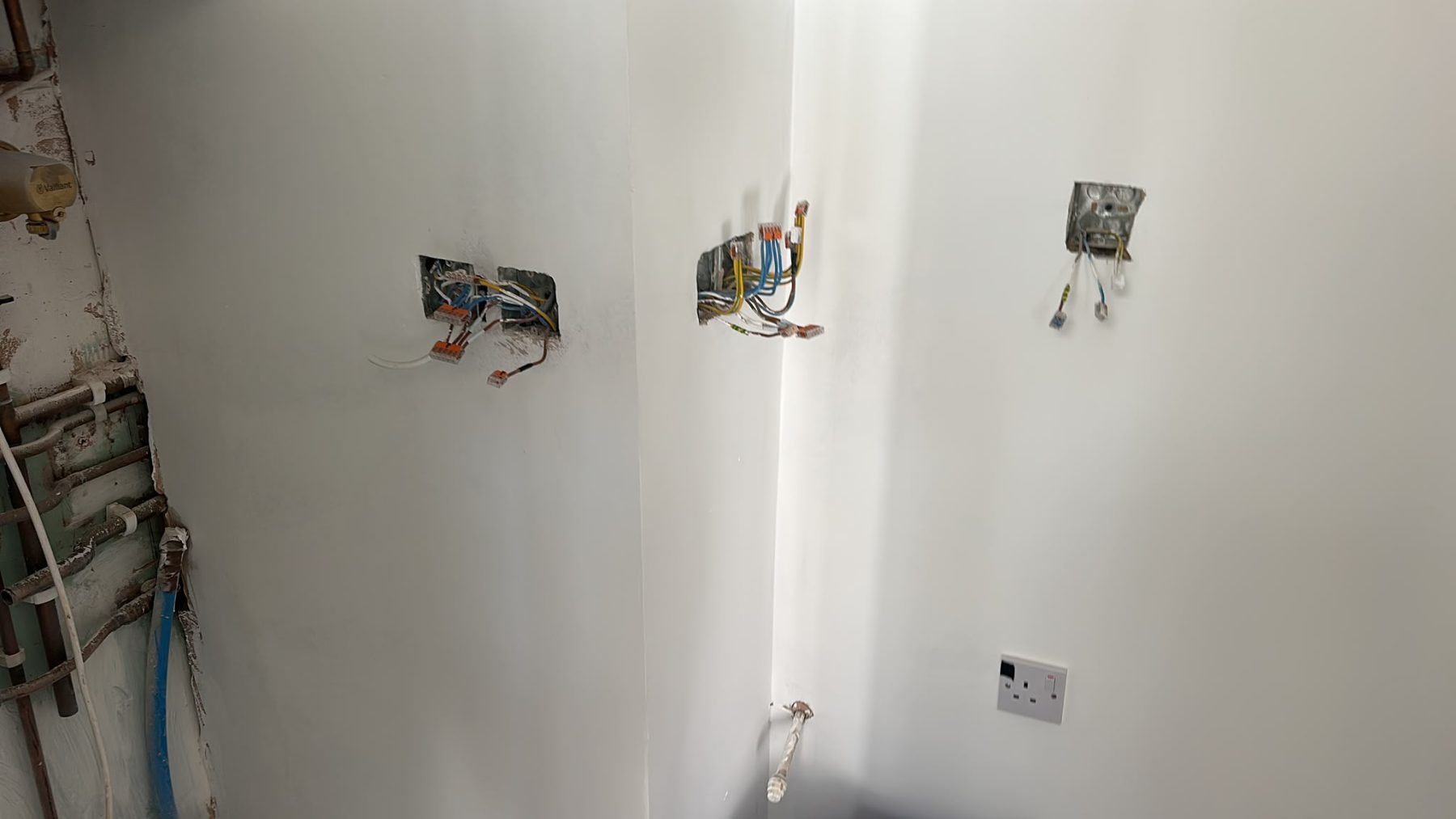
- Exposed conductors anywhere.
- Water ingress affecting any part of the installation.
- A breaker or RCD that will not reset.
In each case: stop using the affected circuit, isolate it at the board if you can do so safely, and get it looked at. If there is fire, smoke or injury, call the emergency services first.
Worth arranging soon
Not emergencies, but they are telling you something and they will not improve on their own:
- A circuit that trips repeatedly, even if it resets.
- Lights that flicker persistently, particularly on one circuit.
- Sockets or switches that are warm to the touch.
- Bulbs failing repeatedly in the same fitting.
- A socket or switch that has become loose in the wall.
- No RCD protection on your board.
- An installation that has not been inspected in a decade or more.
Plan it in
These are projects rather than problems, and the right time to talk to an electrician is early — usually earlier than people do:
- Kitchen or bathroom refits.
- Extensions and loft conversions.
- Garden offices and outbuilding supplies.
- EV charge point installation.
- Lighting schemes.
- Buying a property, or preparing one to let.
The reason to involve an electrician early is that the electrical requirement often affects decisions that are expensive to revisit — most commonly whether the existing consumer unit can take the new circuits at all.
Things you can check yourself
Before calling, it is worth checking whether the RCD or a breaker has tripped, whether the problem affects one circuit or the whole property, whether neighbours are also without power (in which case it is a supply issue — call 105), and whether a specific appliance causes it.
None of that requires opening anything. All of it makes the call more useful.
Things not to do
Do not repeatedly reset a tripping breaker. Do not fit a higher-rated device to stop something operating. Do not work on the fixed installation yourself — certain work is notifiable under the Building Regulations, and beyond the legal position, the risk is real.
If in doubt
Describing the problem costs nothing. Call 07832450917 and we will tell you whether it sounds urgent, whether it can wait, and what is likely to be involved.
Keep reading
Related guides
Why Does My Circuit Breaker Keep Tripping?
A breaker that trips is doing its job. Understanding which of three faults it is reporting tells you how seriously to take it.

Domestic Electrical Safety: What to Check at Home
A short, practical list of things worth noticing in your own home — none of which require tools or any risk to you.
What an EICR Is, and What the Codes Actually Mean
Electrical Installation Condition Reports are full of codes that decide whether you have a problem. Here is how to read one.