Outdoor and Security Lighting That Actually Works
Most security lighting fails not because it is dim, but because it is aimed badly and triggers constantly.
Outdoor lighting does two jobs: it makes the outside of a property usable, and it makes it safer. Most installations do one of them badly and the other not at all.
The two mistakes
The first is over-lighting. A garden lit to the level of a supermarket car park is not pleasant, does not flatter the property, and annoys the neighbours. Restraint reads as considered; floodlighting reads as a depot.
The second is badly aimed motion lighting. A floodlight that triggers whenever a cat crosses the garden, a bus passes or a branch moves does not improve security. It becomes noise — and once people stop looking when it comes on, it has stopped doing anything at all except irritating everyone within sight of it.
What good outdoor lighting does
It lights the things that need lighting: the path from the gate to the door, the steps, the entrance, the bin store, the route to the car. Ground-level or low-level light along a path is more useful and far more pleasant than a single bright source at the back of the house.
For amenity lighting, warm colour temperatures work better outdoors than cool ones, and lighting features — a tree, a wall, a planted bed — gives the space depth that flat illumination does not.
Security lighting, done properly
Three things determine whether it works:
Position. Cover the routes someone would actually take — the side access, the rear gate, the point where a boundary can be crossed. Lighting an open lawn nobody would walk across achieves nothing.
Aim. Downward and inward, onto your own property. A light aimed at a neighbour's window or across a road is a nuisance, and in some cases a legal one.
Sensitivity and timing. Detection range and sensitivity need setting on site, in the dark, watching what actually triggers them. Factory defaults are almost never right.
Lighting and cameras together
Lighting and CCTV work considerably better designed together than separately. A camera pointing directly into a floodlight produces a silhouette and nothing else; lighting that illuminates a face at the point a camera sees it produces usable footage.
If you are planning both, plan them at the same time.
The technical side
Outdoor fittings need an ingress protection rating suitable for their position, and outdoor circuits need RCD protection without exception. Supplies to outbuildings need the correct cable, installed at the correct depth if buried, with appropriate protection.
The most common informal arrangement we are asked to fix is an extension lead running from a house to a shed. It is unsafe in dry weather and actively dangerous in wet.
Neighbours
Worth saying plainly: light spilling into a neighbour's bedroom window causes disputes, and they are entirely avoidable with better aim and a shade. Check what your lighting looks like from next door before considering it finished.
Planning a scheme
Tell us about the property, the routes people use and anything specific you are trying to address. See our lighting page for more.
Keep reading
Related guides
Choosing Lighting for Your Home
Good domestic lighting is layered, consistent and mostly invisible. Here is how to think about it before the fittings are chosen.
LED Lighting Upgrades: What Actually Saves Money
LED upgrades pay back quickly in the right premises — and disappoint in the wrong ones. The difference is mostly product quality.
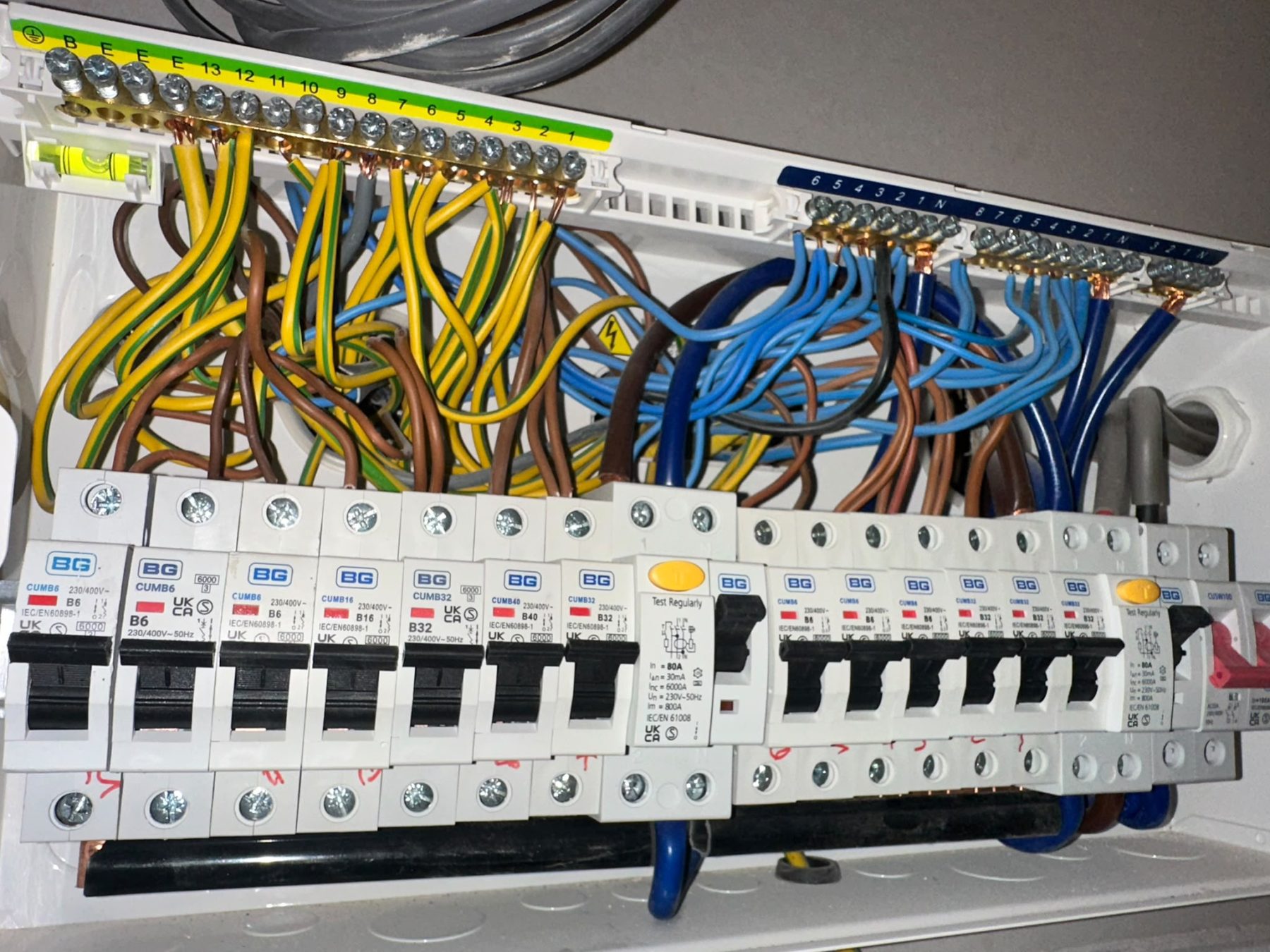
Signs Your Consumer Unit May Need Replacing
Not every old board needs replacing — but some genuinely do. Here is how to tell the difference without guessing.