LED Lighting Upgrades: What Actually Saves Money
LED upgrades pay back quickly in the right premises — and disappoint in the wrong ones. The difference is mostly product quality.
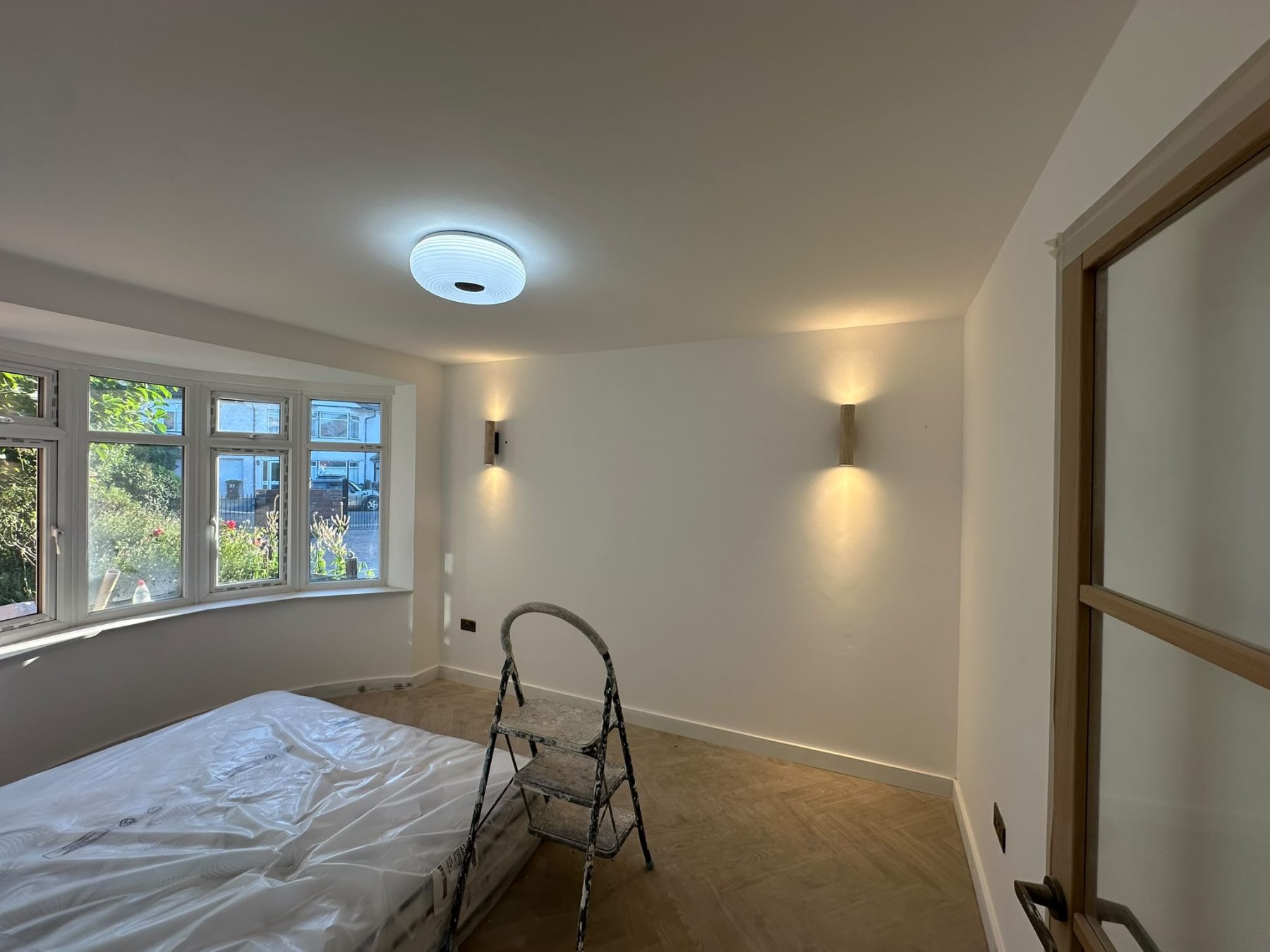
Replacing older lighting with LED is the most requested upgrade we carry out, and in the right premises it genuinely pays for itself. It also produces more disappointed customers than any other lighting work, and the reasons are consistent.
Where the saving is real
The economics are driven by hours of operation. A fitting that runs twelve hours a day, six days a week, saves roughly six times what the same fitting saves in a domestic hallway.
That makes LED upgrades most compelling in:
- Retail premises lit throughout trading hours.
- Offices with long occupancy.
- Warehouses and workshops, particularly where old discharge lighting is still in place.
- External and security lighting running dusk to dawn.
- Communal areas in managed property, which are often lit permanently.
In a home, the saving is real but modest. The better domestic arguments for LED are dimming control, colour quality and the fact that you are not replacing lamps in awkward positions every few months.
The second saving: maintenance
In commercial premises this is frequently larger than the energy saving and almost always omitted from the calculation.
Every lamp replacement in a warehouse or a high ceiling means access equipment, labour and disruption. Eliminating most of those visits for a decade is worth a great deal — and it is money that does not show up on an electricity bill.
Where it goes wrong: product quality
LED product quality varies enormously, and the cheapest fittings fail in predictable ways.
Colour shift. Cheap LEDs drift over time, so that after two years a run of fittings no longer matches — and replacing one makes it worse.
Early failure. The LED itself rarely fails; the driver does. Cheap drivers in hot, enclosed fittings fail years before the stated life.
Poor colour rendering. Low CRI makes a retail interior look tired and food look unappetising. It is the specification most often economised on, and the effect is immediate and visible.
Where it goes wrong: dimming
If the installation has dimmers, compatibility has to be established before fittings are ordered. Mismatched driver and dimmer combinations cause flicker, buzz, limited range or fittings that will not switch off fully.
This is not a problem installation care can fix afterwards. It is a specification problem.
Retrofit lamps or new fittings?
Retrofit LED lamps into existing fittings are cheap and quick, and in the right circumstances perfectly sensible.
The catch is heat: fittings designed for filament or fluorescent lamps often trap heat around an LED driver in a way the original lamp did not care about. That shortens life considerably. Enclosed fittings are the worst case.
Where fittings are old, inefficient or inappropriate, replacing them outright usually gives a better result and a longer life.
Emergency lighting
If a lighting upgrade touches areas with emergency lighting, that provision needs reviewing at the same time — particularly if fitting positions change. It is a common gap after a refurbishment.
Assessing a scheme
Tell us the premises, the operating hours and what is installed now. We can set out what a realistic saving looks like rather than a headline figure. See lighting and commercial electrical services.
Keep reading
Related guides
Choosing Lighting for Your Home
Good domestic lighting is layered, consistent and mostly invisible. Here is how to think about it before the fittings are chosen.
Outdoor and Security Lighting That Actually Works
Most security lighting fails not because it is dim, but because it is aimed badly and triggers constantly.
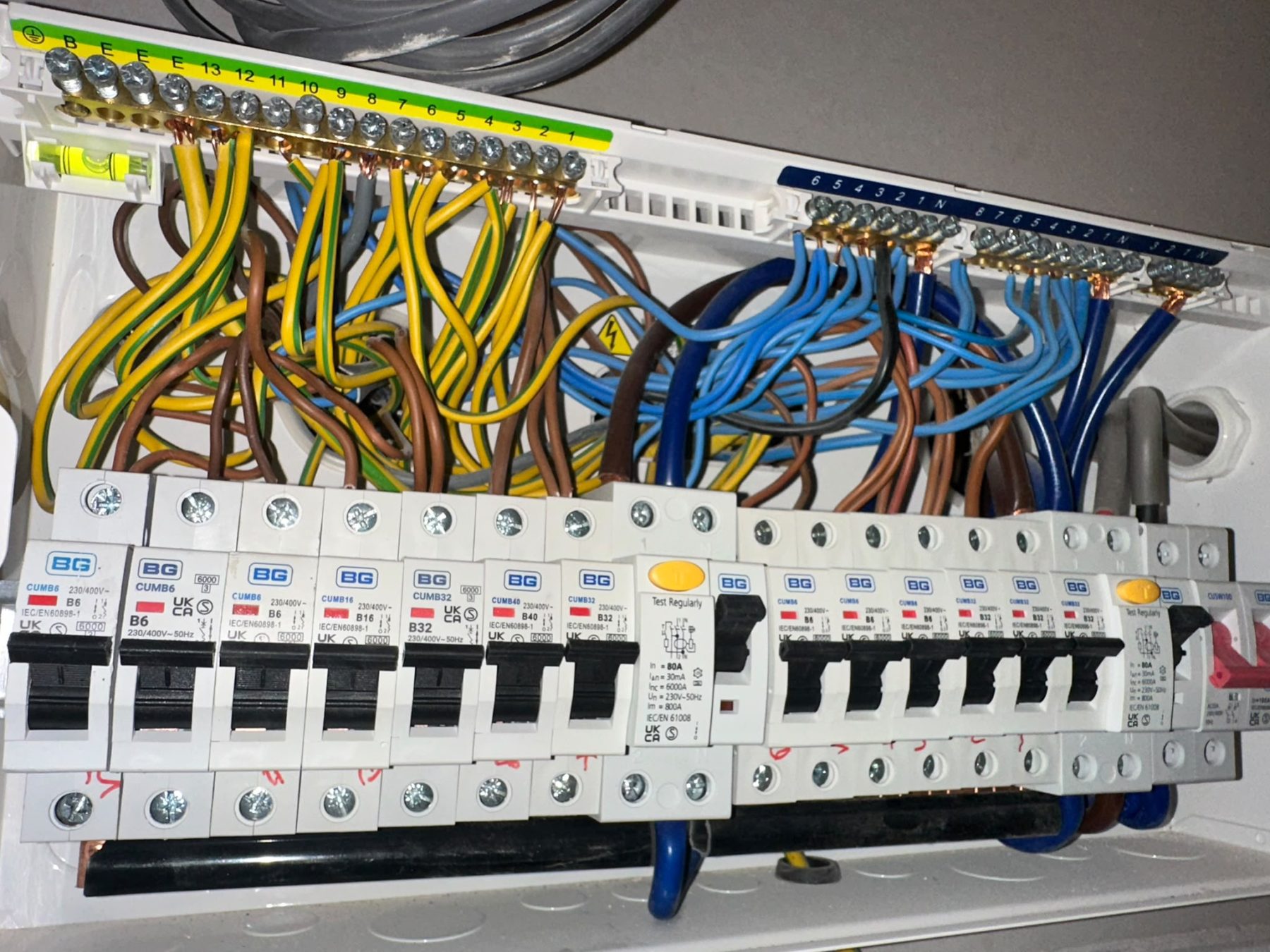
Signs Your Consumer Unit May Need Replacing
Not every old board needs replacing — but some genuinely do. Here is how to tell the difference without guessing.