Choosing Lighting for Your Home
Good domestic lighting is layered, consistent and mostly invisible. Here is how to think about it before the fittings are chosen.
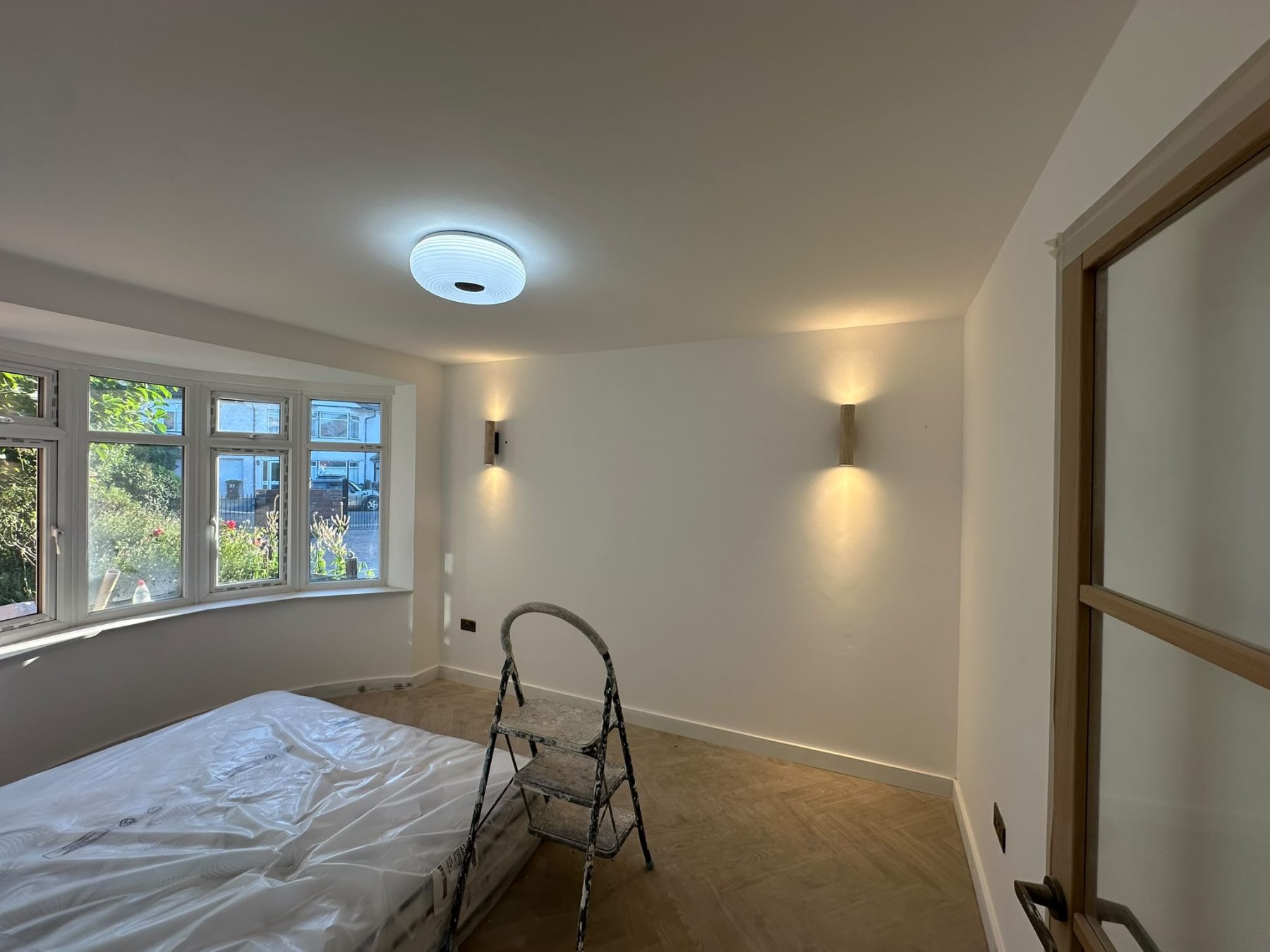
Lighting is the electrical work people actually notice. Sockets are invisible until they fail. Lighting changes how a room feels every single time you walk into it — which makes it worth more thought than it usually gets.
The common mistake is starting with fittings. Start with what the room is for.
Think in layers
Almost every well-lit room has three layers, even if nobody planned it that way:
- Ambient light — the general light level in the space.
- Task light — light where you actually do things: reading, cooking, working.
- Accent light — light on the things worth looking at.
A single pendant in the middle of a ceiling provides the first and nothing else. That is why rooms lit that way feel flat, and why a table lamp improves them so dramatically.
Colour temperature, and being consistent
Colour temperature is measured in kelvin. Lower numbers are warmer.
- 2700K — warm, suits living rooms and bedrooms.
- 3000K — slightly crisper, works well in kitchens and bathrooms.
- 4000K — neutral, suits workspaces, utility areas and garages.
The important rule is consistency within a space. Mixing 2700K and 4000K in one room is the single most common reason a newly lit space feels subtly wrong without anyone being able to say why. One of them always looks faintly blue and slightly dirty.
Colour rendering
CRI describes how accurately a light source renders colour. Below about 80, skin tones and materials start to look flat and slightly off. Above 90 is noticeably better, and worth specifying anywhere people or materials matter — kitchens, bathrooms, dressing areas.
This is the specification that cheap fittings quietly economise on.
Fewer downlights than you think
Ceilings covered in evenly spaced downlights produce a flat, faintly institutional light, and they light the floor rather than the room. A smaller number, placed where light is actually needed — over a worktop, beside a wall — combined with other layers produces a far better result.
Dimming, done properly
Dimming is the single biggest improvement available to most domestic lighting, and it is where LED installations most often go wrong.
The cause is nearly always compatibility: the dimmer and the LED driver do not suit each other. Older dimmers designed for filament lamps frequently do not work properly with LED loads, producing flicker, buzz, a limited dimming range, or fittings that will not turn off fully.
Establish compatibility at specification. Resolving it afterwards means replacing fittings, dimmers, or both.
Switching
Worth thinking about before first fix, because changing it later means chasing walls:
- Two-way switching at both ends of a hallway and at the top and bottom of stairs.
- Separating layers onto different switches, so a room can be lit in more than one way.
- Switch positions that suit how people actually move through the room.
Smart control
If smart lighting is likely, decide early whether control is per-fitting or per-circuit — it changes the wiring. Retrofitting is possible but usually more limited than designing for it from the start.
Talking it through
We are happy to discuss a lighting scheme before anything is ordered. See our lighting page.
Keep reading
Related guides
LED Lighting Upgrades: What Actually Saves Money
LED upgrades pay back quickly in the right premises — and disappoint in the wrong ones. The difference is mostly product quality.
Outdoor and Security Lighting That Actually Works
Most security lighting fails not because it is dim, but because it is aimed badly and triggers constantly.
Signs Your Consumer Unit May Need Replacing
Not every old board needs replacing — but some genuinely do. Here is how to tell the difference without guessing.