Electrical Upgrades That Make the Most Difference
If you were only going to do a few things to a home’s electrics, these would be the ones worth doing.
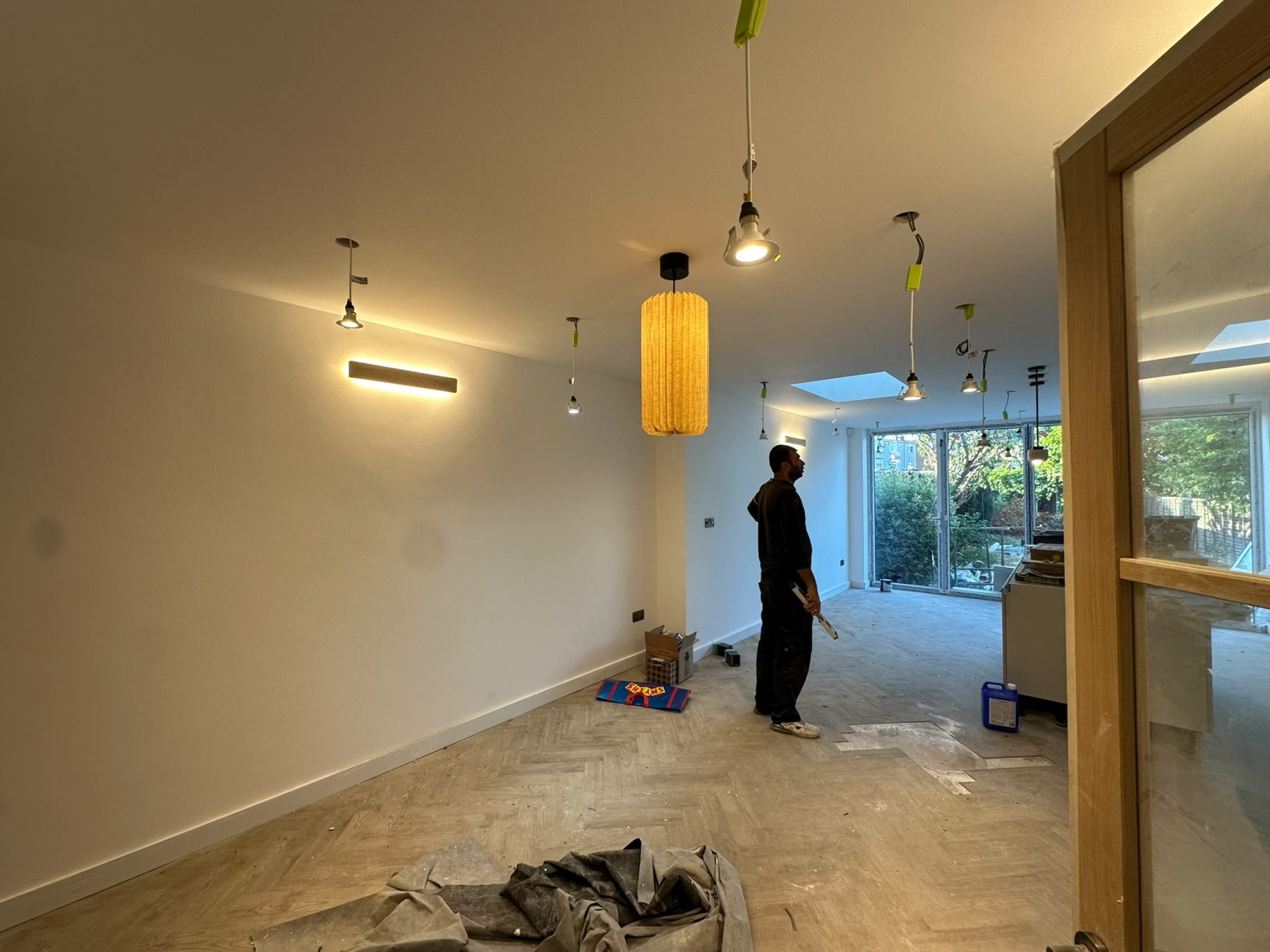
Electrical work is not glamorous, and it competes for budget with things people can see. So if the budget is limited, what actually earns its place?
Here is an honest ranking, based on what changes most for the money.
1. RCD protection, if you do not have it
Nothing else comes close on a safety basis. An RCD disconnects the supply when current leaks to earth — the fault that injures and kills people.
If your consumer unit has no RCD protection, this is the one to do. Everything else on this list is comfort or convenience; this one is not. See our consumer unit page.
2. Enough sockets, in the right places
The cheapest improvement to how a house works day to day. It removes extension leads, which removes both a fire risk and a trip hazard, and it makes rooms usable in the way people actually use them.
Sockets at both sides of a bed, at the media wall, and where a desk actually sits are the ones people notice every day.
3. Better lighting, particularly layered and dimmable
The change people feel most. Moving from a single ceiling fitting to layered, dimmable lighting alters how a room feels every time you walk into it — and it is a modest job.
The details that matter: consistent colour temperature, decent colour rendering, and dimmer-driver compatibility established before anything is ordered. See our lighting page.
4. Outdoor lighting on the approach
Lighting the path from the gate to the door improves safety and usability out of all proportion to the cost. It is particularly valuable in winter, and particularly valuable for anyone less steady on their feet.
5. Additional circuits where demand has grown
Where a kitchen or a home office is on a circuit that is consistently marginal, adding capacity removes the nuisance tripping that everyone has learned to live with.
6. A supply to the garden
If there is a shed, a garage or any prospect of a garden room, a proper outdoor supply is worth having. It replaces the extension lead that is currently doing the job, and it is far cheaper to install while a garden is being landscaped than afterwards.
7. Interlinked mains smoke alarms
Considerably more reliable than battery units. They do not get removed when they chirp, and one alarm sounding sounds them all — which is what matters at 3am in a house with a staircase.
8. EV charging provision, if it is coming
Even if you are not buying an electric car yet, knowing whether your property can support a charge point is useful. If board work is needed anyway, doing it once rather than twice is cheaper.
What is usually further down the list
Full rewires, unless testing indicates one. Smart systems, unless you actually want them. USB sockets everywhere, rather than where phones are charged.
None of these are wrong. They are just rarely where the first thousand pounds does the most good.
Where to start
With an inspection, if you do not know the condition of the installation. It tells you whether anything on this list is actually a priority for your property — which is more useful than any general ranking.
Keep reading
Related guides
Domestic Electrical Safety: What to Check at Home
A short, practical list of things worth noticing in your own home — none of which require tools or any risk to you.
Common Electrical Problems in London Homes
London’s housing stock produces a recognisable set of electrical problems. Here are the ones we see most often, and why.
Electrical Considerations Before a Loft Conversion
Loft conversions run into the same electrical surprise again and again — and it is one that is much cheaper to find at design stage.