Electrical Fault Finding: How a Fault Is Actually Traced
Fault finding is a methodical process, not a hunt. Understanding it explains why it is charged separately from the repair.
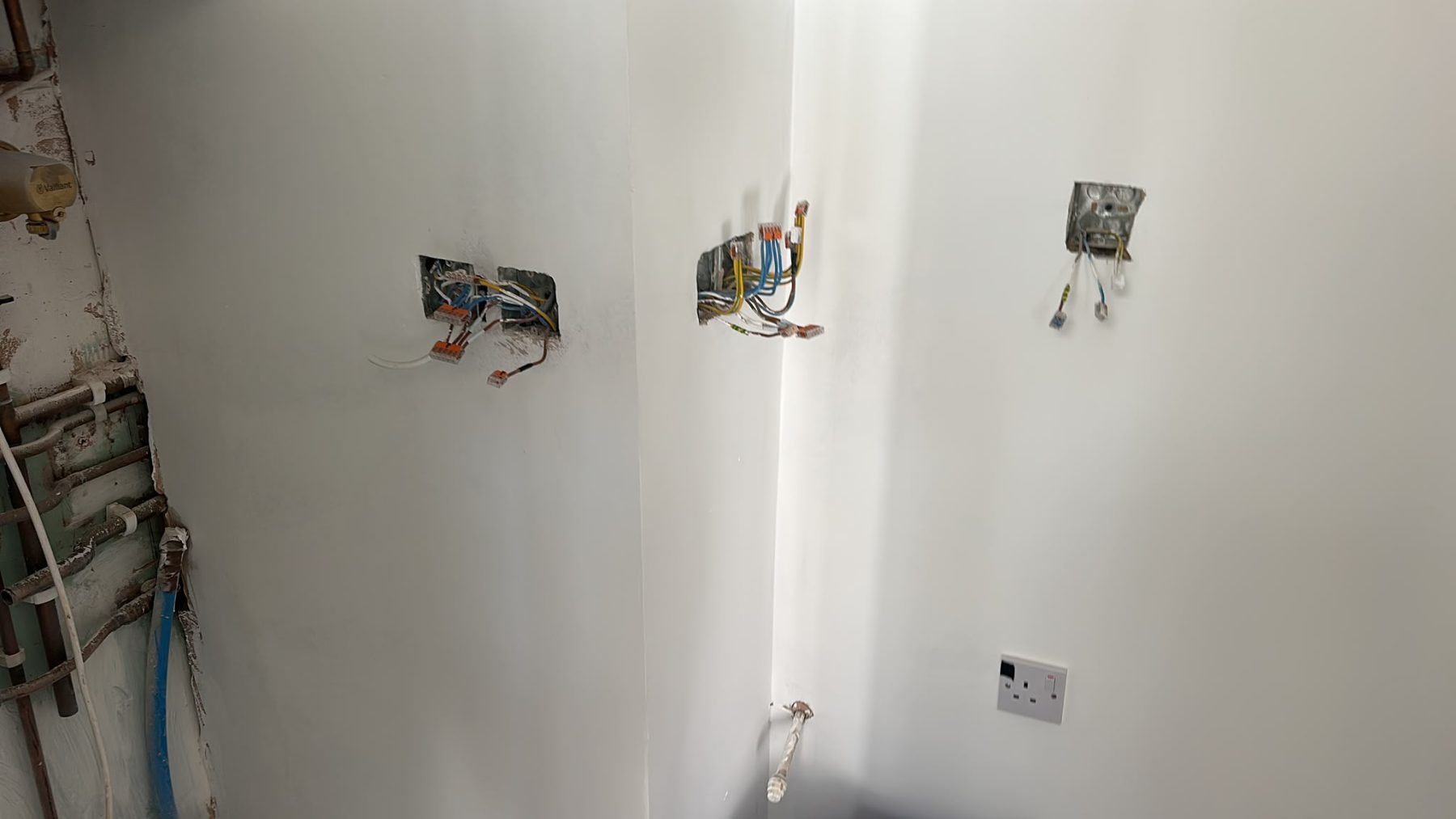
"Can you just come and fix it?" is a reasonable request, and the honest answer is often no — because until the fault is found, nobody knows what fixing it involves.
Fault finding is a discipline in its own right. Here is what it actually consists of.
Step one: information
Before any test equipment comes out, the useful questions are:
- What exactly happens, and what were you doing when it happened?
- Is it constant or intermittent?
- Does it correlate with anything — weather, time of day, a particular appliance?
- When did it start, and did anything change around then?
- Has any work been done recently?
That last question matters more than people expect. Faults that appear shortly after building work, decorating or an appliance installation frequently trace back to it — a screw through a cable is the classic.
Step two: narrow the scope
Is the fault on one circuit or several? On the fixed installation or an appliance? Present now, or only sometimes?
The appliance question is answered quickly: disconnect everything, reset, and reconnect one item at a time. If the fault persists with nothing connected, it is in the fixed wiring.
Step three: testing
The main tests, in plain terms:
Insulation resistance. Applies a test voltage and measures how well the insulation is holding. Low readings mean deteriorated insulation, damaged cable or moisture — this is the test that finds most earth leakage faults.
Continuity. Confirms conductors are intact end to end, and confirms that protective conductors are actually connected.
Polarity. Confirms live, neutral and earth are where they should be. Reversed polarity is more common in older and amateur work than anyone would like.
Earth fault loop impedance. Confirms that if a fault occurs, enough current will flow for the protective device to operate quickly.
Step four: divide and conquer
With a fault identified on a circuit, the circuit is progressively split — disconnecting at accessible points and retesting each section. The fault is then either side of that point, and the process repeats.
It is systematic, and it is why fault finding takes the time it does. There is no instrument that points at the problem.
Intermittent faults
The hard ones. A fault that is not present when tested cannot be measured.
The approach is to identify the conditions that produce it — moisture, heat, vibration, a particular load — and then either recreate them or test the circuits most likely to be affected under those conditions.
This is where your record of when it happens is genuinely valuable. "Only in heavy rain" points at external cable or an outbuilding supply. "Only when the washing machine spins" points at a specific circuit and a vibration-related connection.
Why it is charged separately
Because it is separate work with an unknown duration. A fault found in twenty minutes and a fault found in four hours are the same job until they are not, and quoting for the repair before the diagnosis would require guessing.
What we can do is be clear about how the time is charged, and keep you informed as we go. See our electrical services page.
Keep reading
Related guides
Why Does My Circuit Breaker Keep Tripping?
A breaker that trips is doing its job. Understanding which of three faults it is reporting tells you how seriously to take it.
What an EICR Is, and What the Codes Actually Mean
Electrical Installation Condition Reports are full of codes that decide whether you have a problem. Here is how to read one.
When Should You Call an Electrician?
Some electrical problems can wait. Some genuinely cannot. Here is a practical way to tell which is which.