Why Fire Alarms Give False Alarms, and How to Stop Them
Repeated false alarms are a safety failure, not an inconvenience. They are also almost always fixable.
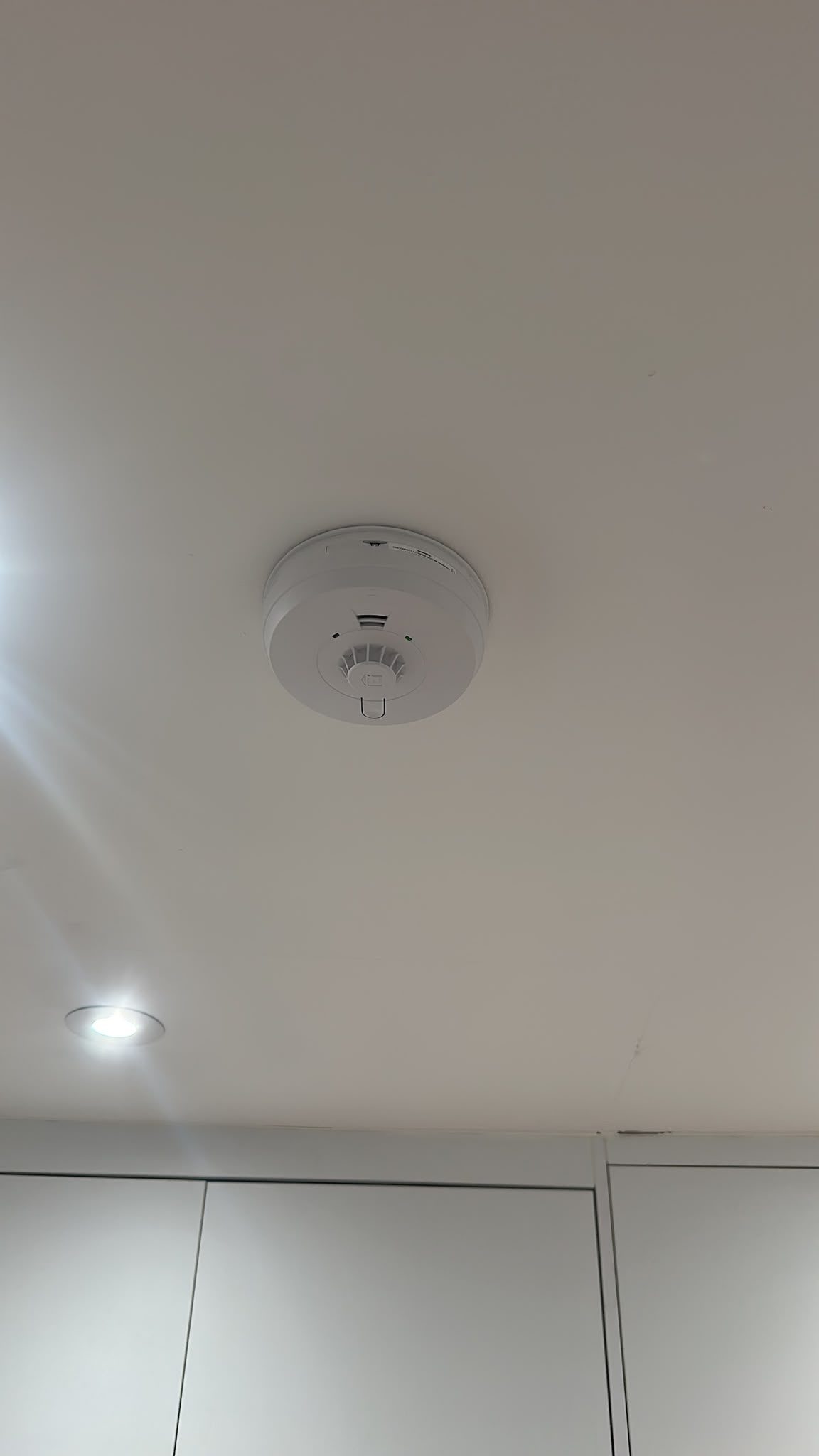
A building that has had six false alarms in a month has a serious problem, and it is not the noise. It is that the seventh alarm will be ignored.
People are remarkably quick to learn that an alarm means nothing, and remarkably slow to unlearn it. That is why false alarms are treated as a safety failure rather than a nuisance — and why they are worth properly diagnosing rather than living with.
The usual causes
Wrong detector, wrong place
By a wide margin the most common cause. Optical smoke detection near a kitchen, a bathroom, a shower room or anywhere producing steam, dust or aerosol will activate on things that are not fires.
The fix is usually straightforward: heat detection where cooking happens, multi-sensor detection in difficult environments, and repositioning detectors that are simply too close to the source.
Contamination
Detectors accumulate dust, insects and airborne grease over years. A detector in a workshop or above a kitchen becomes progressively more likely to false alarm as it fills up.
Cleaning or replacement on a schedule prevents this. It is routine maintenance, and it is frequently skipped.
Age
Detectors have a service life. Beyond roughly ten years they become less reliable in both directions — more prone to false alarms, and less certain to respond to a real fire.
Environmental factors
Draughts carrying dust, direct sunlight causing temperature swings, insects entering the chamber, and condensation all cause activations. Position is usually the answer.
Malicious and accidental activation
Call points in accessible public areas get pressed. Protective covers reduce accidental operation without preventing legitimate use.
Faults
Damaged cable, loose connections, water ingress into an external device, or a failing panel. These usually show as faults rather than alarms, but not always.
Diagnosing it
The essential tool is the logbook. Record every activation: which device, what time, what was happening in the building.
The pattern almost always identifies the cause. Always the same detector? Position or contamination. Always mid-morning? Something in the daily routine. Always in wet weather? Water ingress. Always at the weekend? Heating, or the lack of it.
Without that record, diagnosis becomes guesswork and repeated visits.
What not to do
Do not isolate a zone permanently to stop the alarms. It happens, and it removes detection from part of the building — usually the part that had a reason to be detected.
Do not remove a detector and leave the base empty. Do not reduce sensitivity below what the system requires as a workaround.
Each of these converts a nuisance into an actual risk, and none of them is defensible afterwards.
Getting it resolved
Bring the logbook, or start one. We will look at the pattern, the devices and their positions, and tell you what is causing it. See our fire alarm systems page.
Keep reading
Related guides
Fire Alarm Systems for Commercial Properties
The system specification should follow the fire risk assessment — not a catalogue. Here is how the pieces fit together.
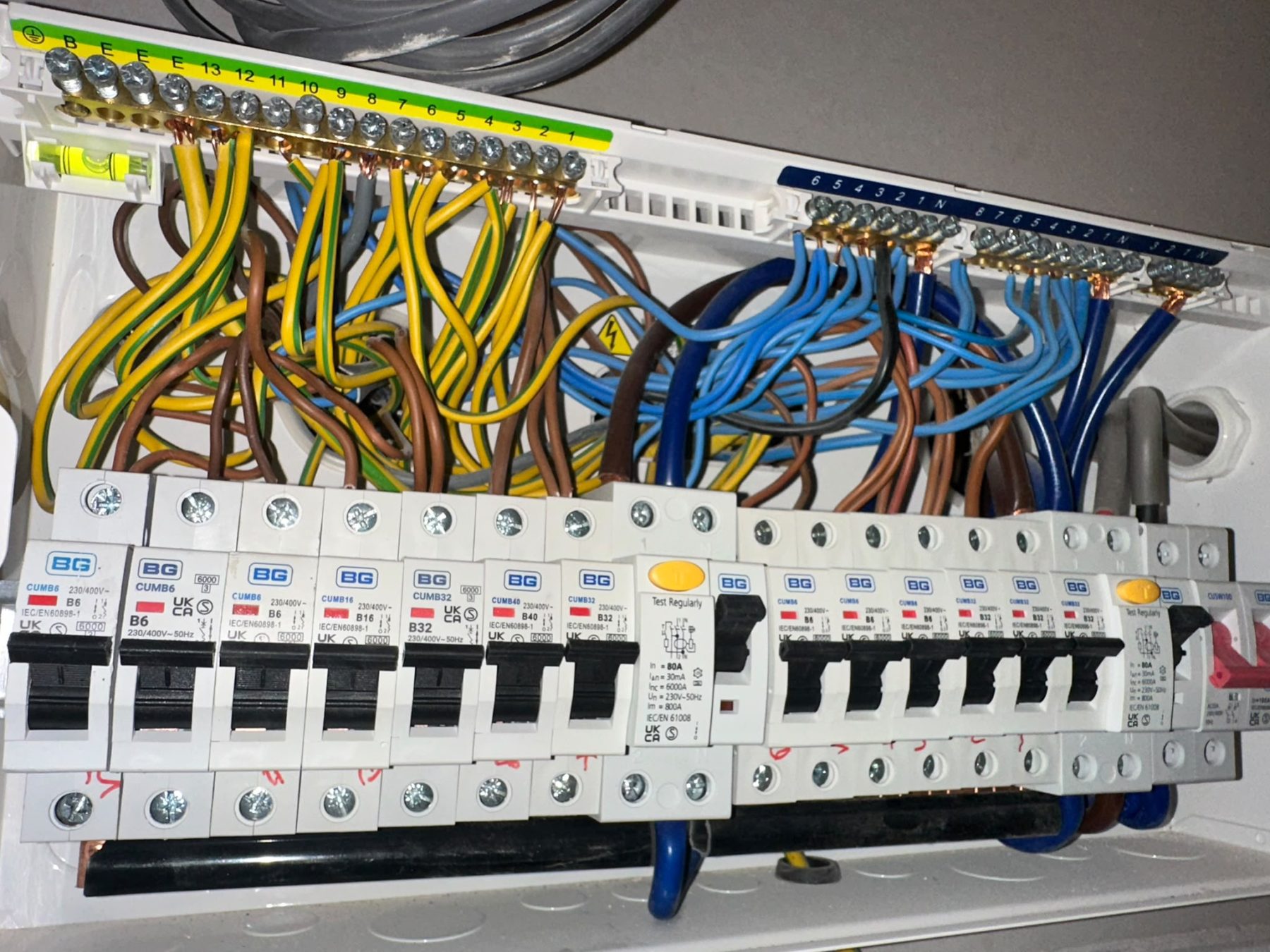
Signs Your Consumer Unit May Need Replacing
Not every old board needs replacing — but some genuinely do. Here is how to tell the difference without guessing.
Consumer Unit vs Fuse Box: What Is the Difference?
They are the same thing — but the difference between an old board and a modern one is substantial, and worth understanding.