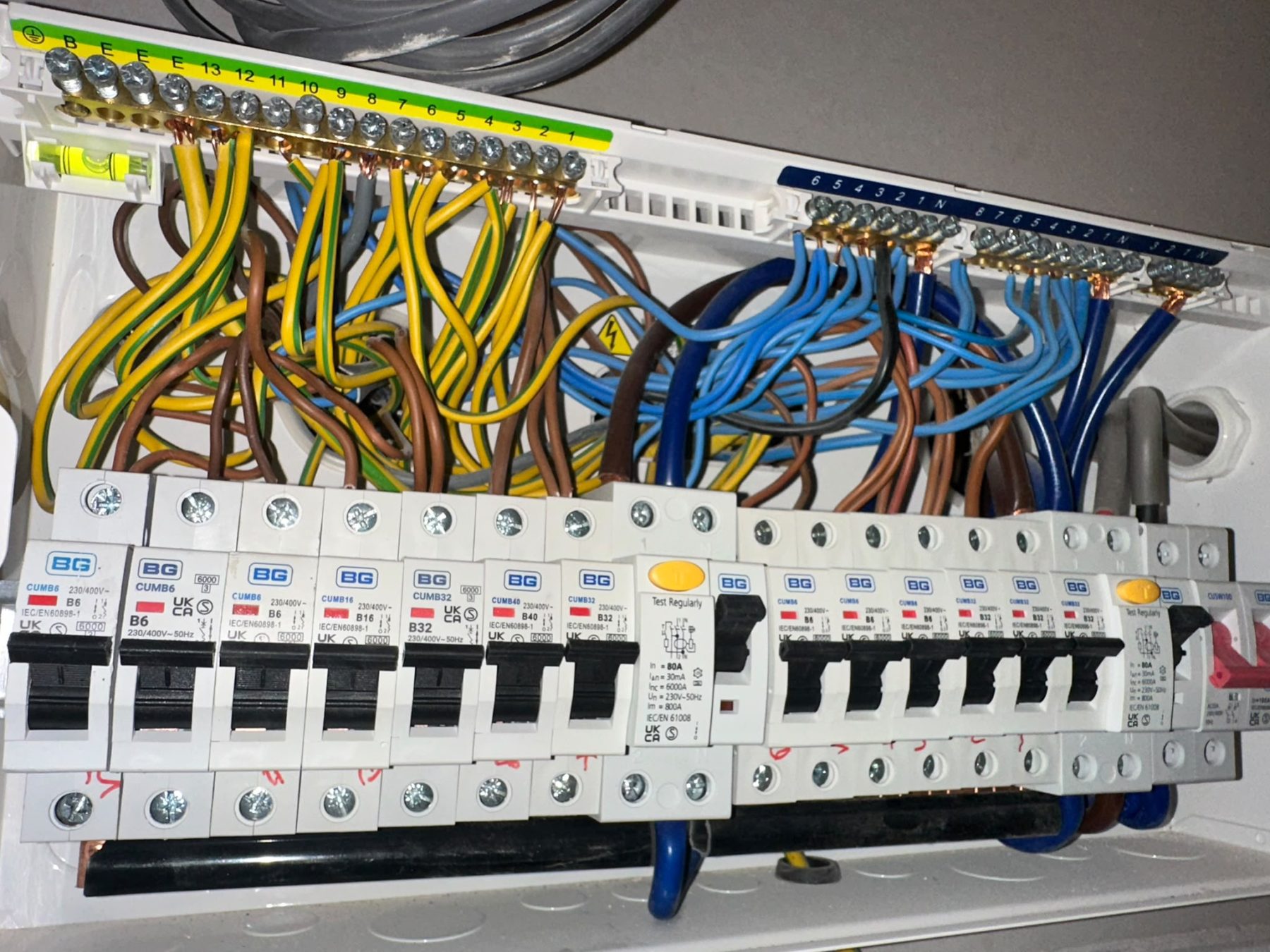
Signs Your Consumer Unit May Need Replacing
Not every old board needs replacing — but some genuinely do. Here is how to tell the difference without guessing.
BeydilliBright Ltd. — London and the surrounding areas
South East London
Southwark runs from warehouse conversions along the river to the Victorian streets of Peckham and the larger houses of Dulwich.
Postcode districts: SE1, SE5, SE15, SE16, SE17, SE21, SE22
Bermondsey and the SE1 riverside are full of converted warehouses and newer apartment development — large volumes, exposed services and lighting that has to do real work in spaces with unusual proportions.
Peckham and Camberwell are terraced and converted; Dulwich has larger detached and semi-detached property where rewiring and lighting schemes are more common.
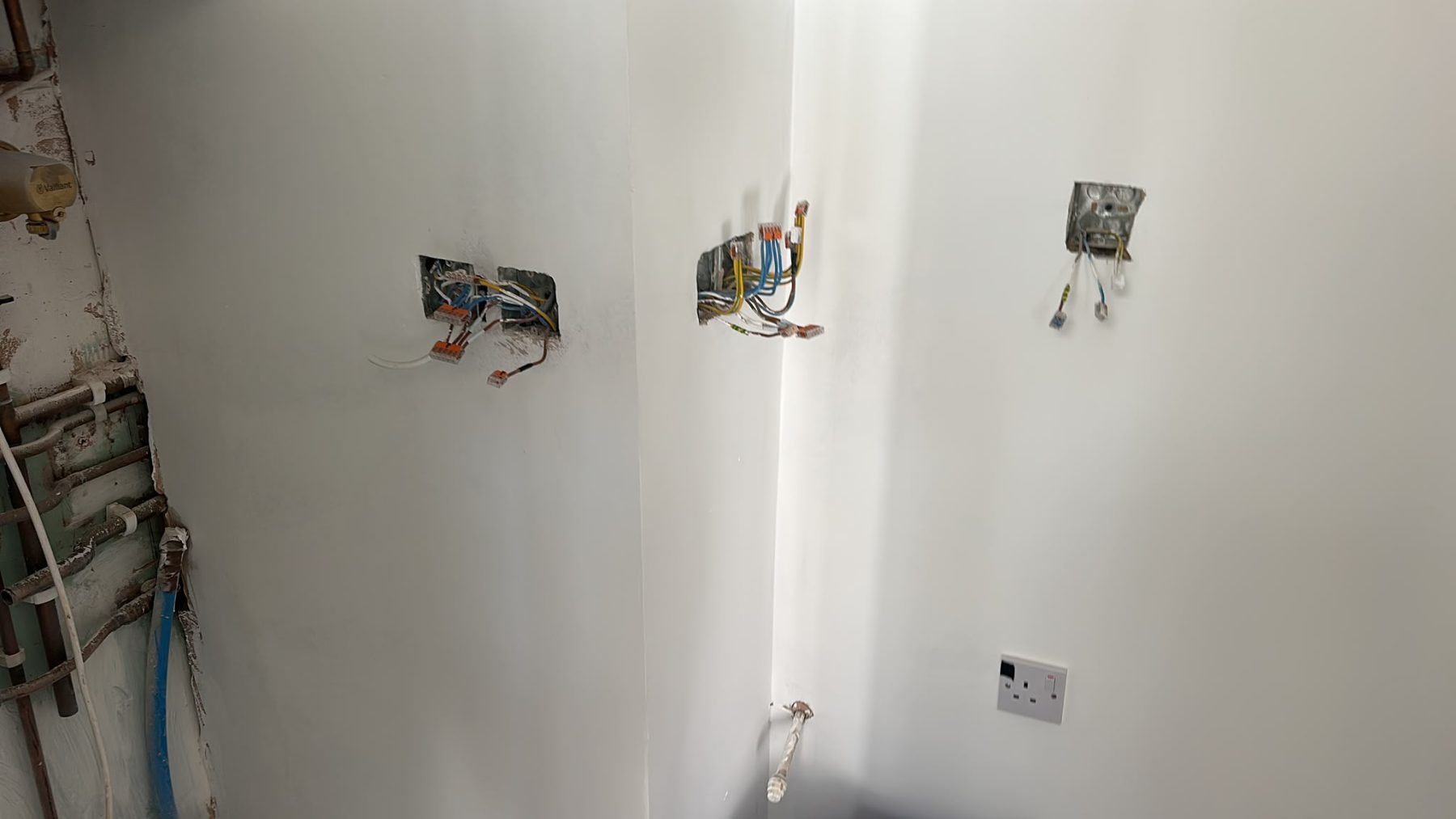
In warehouse conversions, surface containment is often the only practical route for new circuits, and it becomes a visible part of the interior — which makes how it is run a design decision as well as a technical one.
Peckham’s commercial premises, particularly food and drink businesses, generate regular fire detection and remedial electrical work.
Call 07832450917, email info@beydillibright.com, or send an enquiry through the contact page. Tell us what the property is, what needs doing and roughly when you are hoping to have the work carried out. Some jobs can be priced from that description; others need looking at first, and we will say which yours is.
That depends on the job, and we will tell you before arranging anything. A quick look at a consumer unit is different from a detailed survey of a commercial installation. What we will not do is turn up and present a charge you were not expecting.
The property type and rough age, what is happening or what you are planning, and where the consumer unit is. A photograph of the board is genuinely useful and often tells us more than a description. For commercial premises, the trading hours and any access restrictions matter from the first conversation.
For some jobs, yes — a straightforward, well-described piece of work in a property with no complications can be priced from a conversation. For anything where the existing installation affects the answer, a phone quote would be a guess, and a guess that changes later is worse than no quote at all.
It varies with the size of the job and what is already scheduled. Tell us your timescale when you enquire and we will be straight with you about whether it is achievable. We do not publish response times we cannot consistently meet.
Yes. A lot of our domestic work is remedial work following Electrical Installation Condition Reports, consumer unit replacement between tenancies, and repairs in let property. Working through a report's observations systematically is usually quicker and cheaper than addressing them one at a time.
Yes. On refurbishment and extension projects it helps considerably to be involved before first fix, because the electrical requirement often affects decisions that are expensive to revisit — particularly whether the existing consumer unit can take the new circuits.
Yes. Electrical work in an occupied property generates dust and debris, and clearing it is part of the job rather than an extra. Where work involves chasing walls or lifting floors, we will explain beforehand what the disruption will actually look like.
Not every old board needs replacing — but some genuinely do. Here is how to tell the difference without guessing.
They are the same thing — but the difference between an old board and a modern one is substantial, and worth understanding.
A breaker that trips is doing its job. Understanding which of three faults it is reporting tells you how seriously to take it.
Our own photography
Photographs of installations we have completed.
Call us
Describe the fault or the job and we will tell you what is involved.
Keep exploring